James A. Cuthbertson Ltd
Agricultural and general engineers of Biggar, Lanarkshire, founded in 1936 and still trading, whose speciality has always been running gear and machinery for ground too soft to carry a wheel. Between 1958 and the 1960s the firm bolted Series Land Rovers onto four-bogie tracked subframes of its own design, building perhaps fifteen of the tracked Cuthbertsons.
History
James A. Cuthbertson began trading at Biggar, Lanarkshire in 1936, and was incorporated as James A. Cuthbertson Ltd in 1946. The founder, James Archibald Cuthbertson, was an agricultural engineer — the firm is described as such in 1937 directories, broadening to general engineering by 1946 — whose interest lay in machinery that could work wet peat, moss and hill ground. Early products included drainage and forestry planting ploughs, a bracken cutter, a grassland rejuvenator and a lime spreader, several of which took Highland Show silver medals between 1948 and 1950, and the company advertised itself in 1946 as a pioneer of mechanised draining. Its own account credits Cuthbertson with developing endless rubber-belt track and with wartime work on the PLUTO cross-Channel fuel pipeline.
Rubber track became the house speciality. Cuthbertson made half-track and trailer-track conversions for Fordson tractors in 1951-52, and from about 1951 built the Water Buffalo, a very heavy low-ground-pressure tracked tractor on a 75 hp Albion engine that the Forestry Commission and its contractors used for peat ploughing, drainage and recovering bogged machines into the early 1960s. Plant recovery from hillsides and peat bogs became a business in itself, and the firm also worked on underwater pipelines and on cable-laying along railways and motorways.
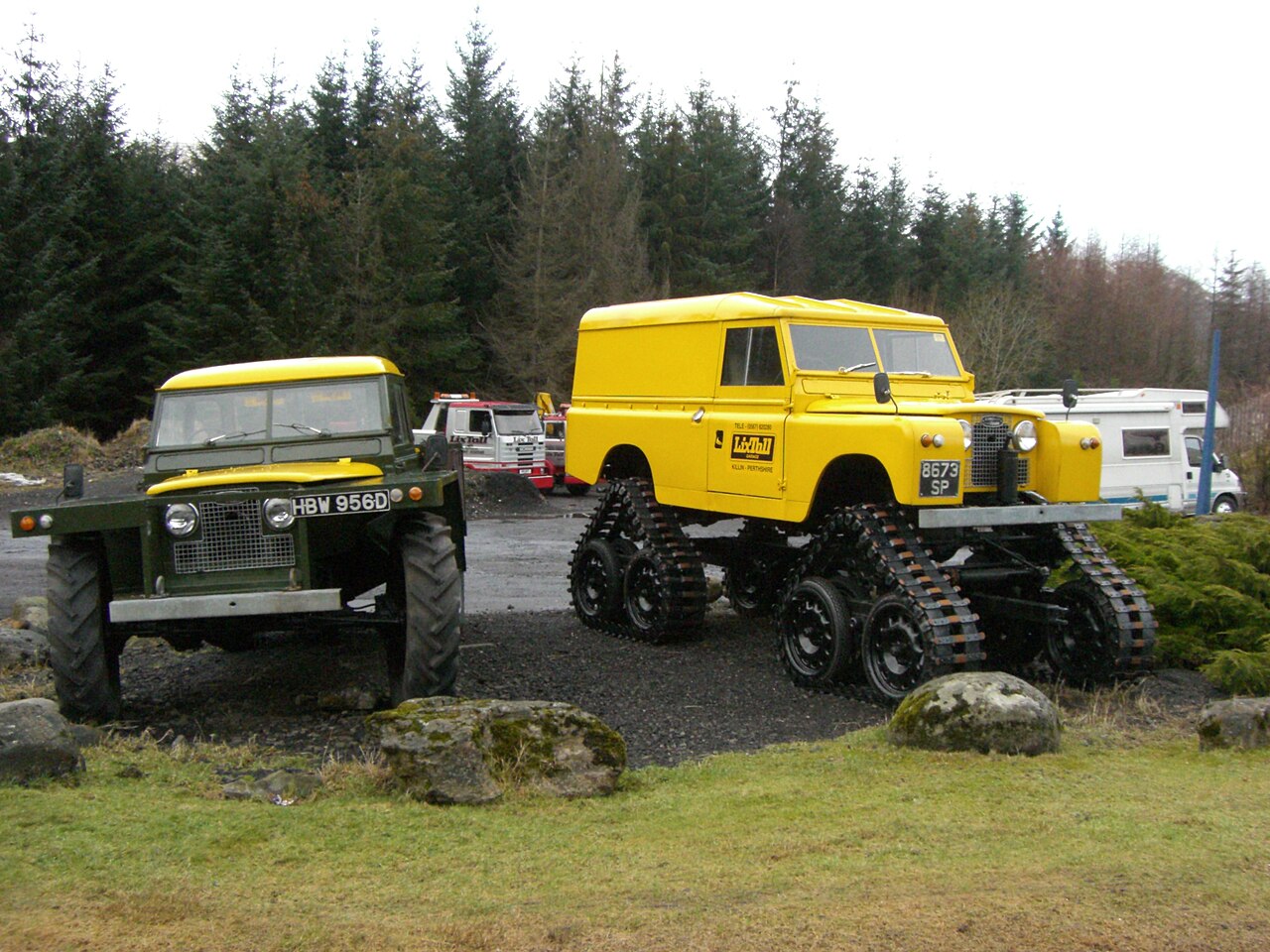
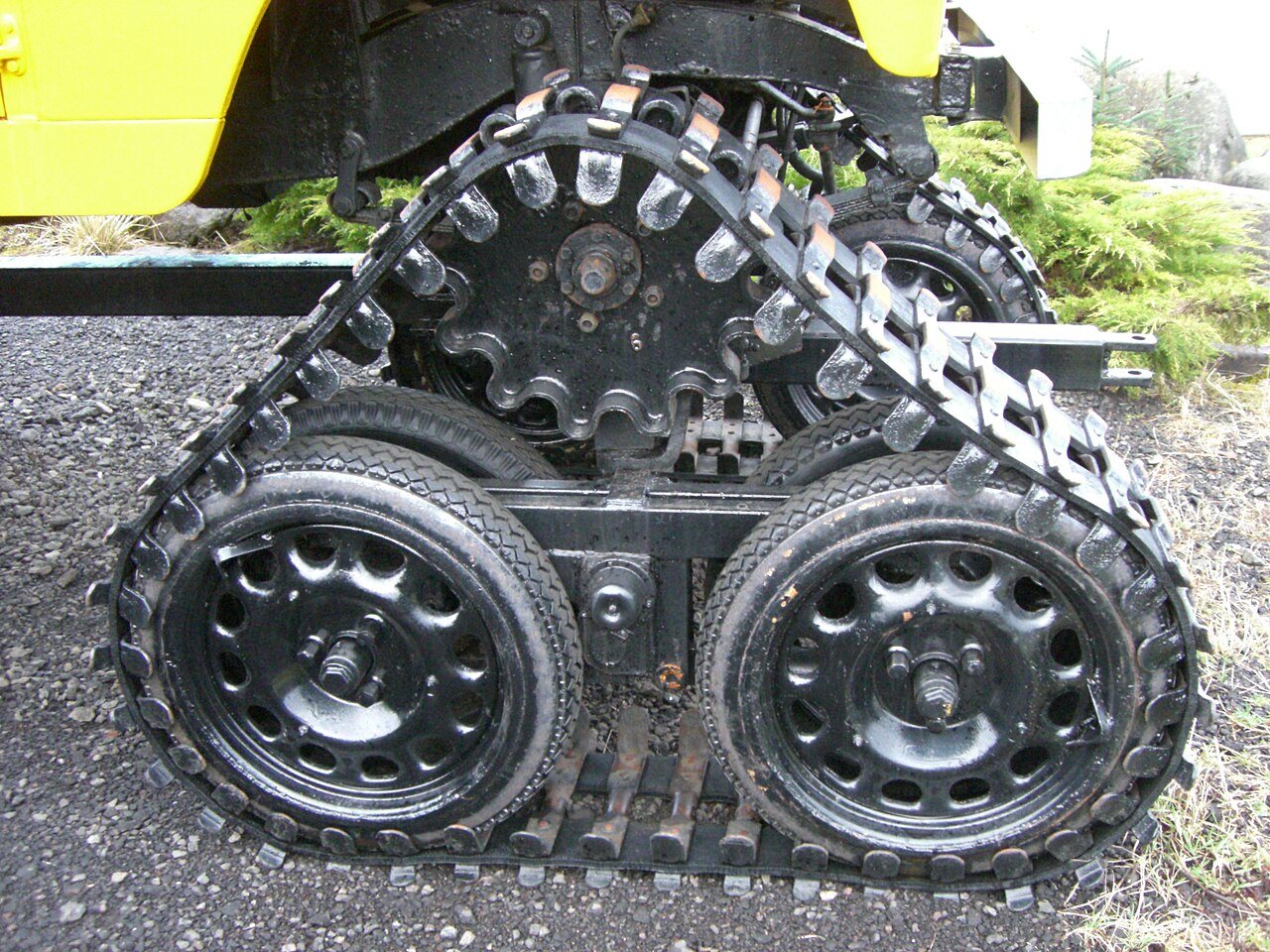
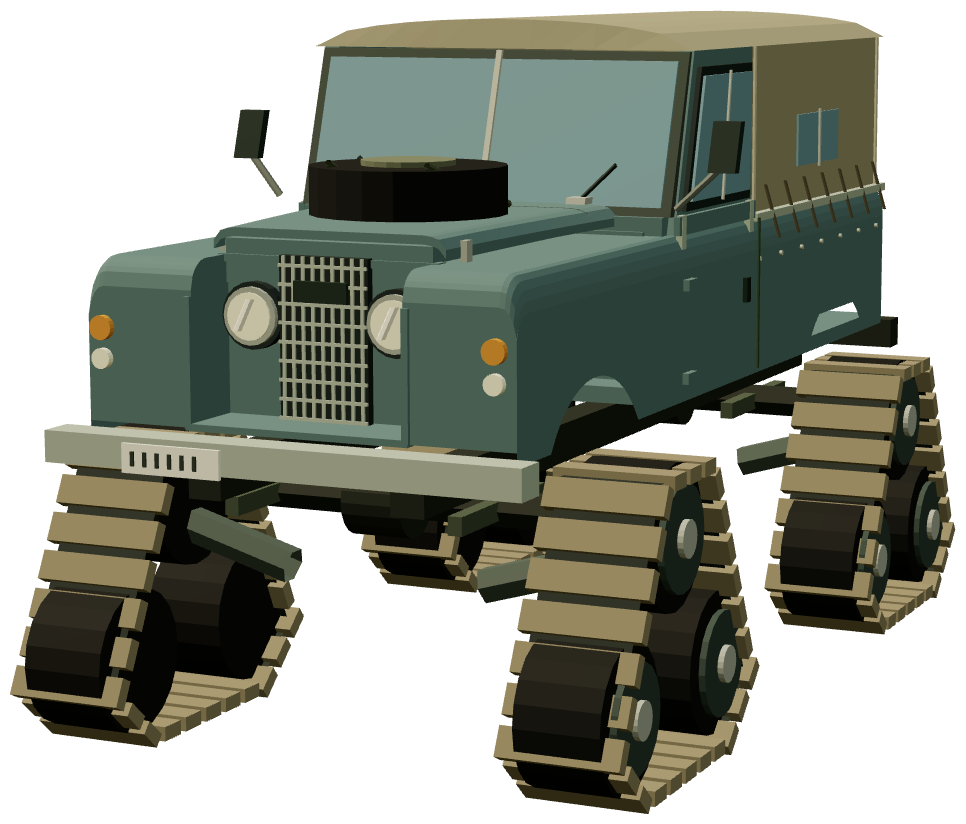
The tracked Land Rover followed in 1958 and is the vehicle the company is now best remembered for outside Scotland. Rather than modify the Land Rover, Cuthbertson built a girder subframe carrying four rubber-jointed track bogies and bolted a standard vehicle on top; the road wheels were replaced by driving sprockets, the front bogies steered on a track-rod linkage with engine-driven assistance, and ground pressure fell to roughly 1.9 lb/sq in. Conversions were done on Series I, II and III donors in both wheelbases for estates, utilities, telephone companies and the military, but the total was small — around fifteen, certainly fewer than twenty — and only a handful survive, among them the 1958 Series II 109 at the British Motor Museum, Gaydon.
James A. Cuthbertson Ltd is still in business at Biggar ninety years after it started, having settled on winter maintenance as its main trade: snowploughs, snowblowers and gritters for local authorities, ground support equipment for Glasgow and Edinburgh airports, and custom fabrication. The tracked vehicles are long out of production.
Imagery
Vehicles in this registry (1)


Sources & citations
- Company History (established 1936 in Biggar, Lanarkshire; incorporated 1946; James Archibald Cuthbertson and the first endless rubber belt; PLUTO pipeline work; tracked Land Rovers and the Water Buffalo; today snowploughs, gritters and airport ground support equipment) ↗ — James A. Cuthbertson Limited (accessed 2026-09-10)
- From an agricultural engineer to a maker of snowploughs: James A. Cuthbertson Ltd, Biggar (trading 1936, limited company 1946; 'agricultural engineers' 1937 and general engineering by 1946; drainage and forestry ploughs, bracken cutter, lime spreader, Highland Show medals 1948-50; Fordson half-track and trailer-track conversions 1951-52) ↗ — Scottish agricultural implement makers (accessed 2026-09-10)
- Cuthbertson Water Buffalo tractor (built by James Cuthbertson of Biggar from about 1951 into the 1960s; 75 hp Albion engine; very low ground pressure; Forestry Commission peat ploughing, drainage and recovery work) ↗ — Forestry Memories (accessed 2026-09-10)
- 1958 Tracked Cuthbertson Land Rover (Biggar firm founded 1936; girder subframe and sprocket-driven bogies; fewer than 20 built; utility and military use) ↗ — Silodrome (accessed 2026-09-10)
- Conversions: Cuthbertson Tracked Land Rover (around 15 made on Series I, II and III donors; ~1.9 lb/sq in ground pressure; power-assisted front bogie steering) ↗ — Land Rover Katy (accessed 2026-09-10)
Maker record updated 2026-09-10T05:17:07.278Z · status: researched