Minerva
Belgium's grandest motor marque, founded at Antwerp in 1897 by the Dutchman Sylvain de Jong and famous before 1940 for sleeve-valve luxury cars and for the armoured cars of 1914. Reduced after the war to licence assembly, it built the steel-bodied Minerva TT Land Rover for the Belgian Army at Mortsel from 1952 until the Rover contract collapsed in 1956; the company was liquidated in 1958.
History
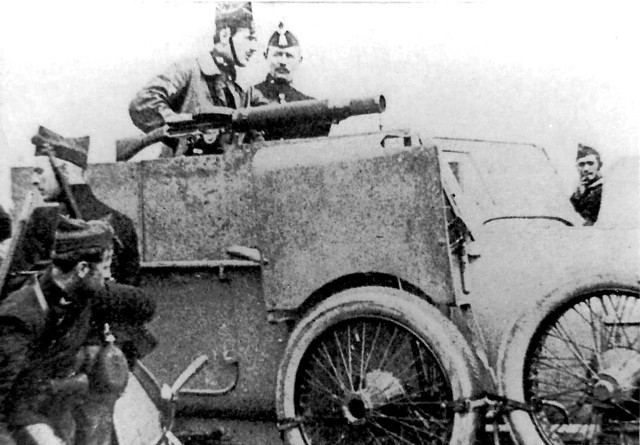
Sylvain de Jong, a Dutchman settled in Belgium, began making bicycles at Antwerp in 1897 and moved on to clip-on engines and motorcycles from 1900. Cars followed from 1902, and in 1903 the business was formally constituted as Société Anonyme Minerva Motors at Berchem, Antwerp. Minerva's reputation was made on the Knight double-sleeve-valve engine, which it adopted in 1908 and which gave its cars a legendary smoothness and silence; before 1914 it sold to royalty and to the wealthy across Europe, and it built aero engines as well. In the opening weeks of the First World War Minerva touring chassis were plated with boiler steel at the Antwerp works to make the Belgian Army's Minerva armoured cars — among the first armoured cars used in action anywhere.
The Depression ended the grand era. The firm was reconstituted as Société Nouvelle Minerva and in 1934 merged with its Belgian rival Impéria, which continued to sell Minerva-badged cars until 1938. After the Second World War the company had neither the capital nor the market for a new luxury car of its own, and turned instead to assembling other manufacturers' vehicles at its remaining plant at Mortsel, on the southern edge of Antwerp — including Standard Vanguard saloons for the Belgian market.
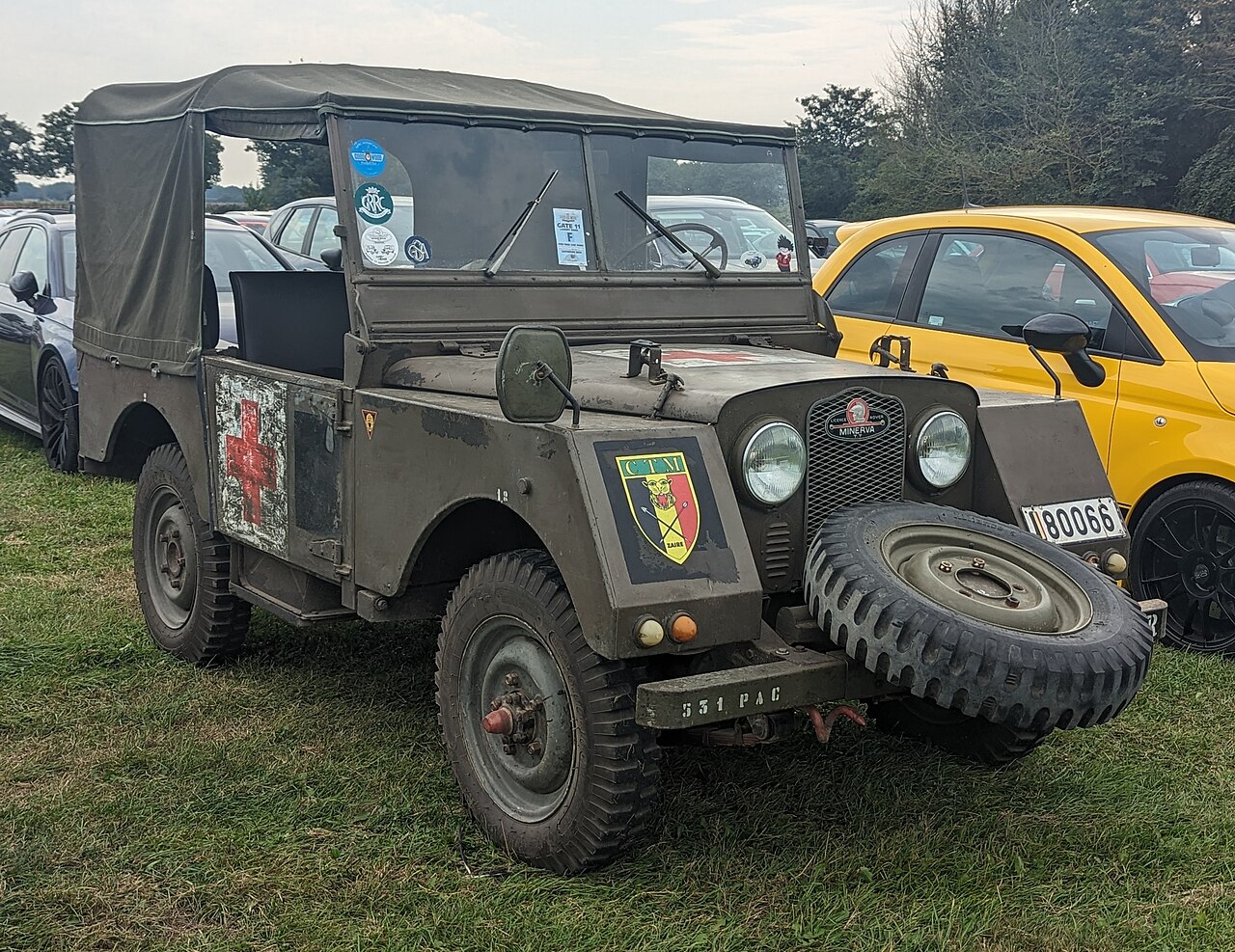
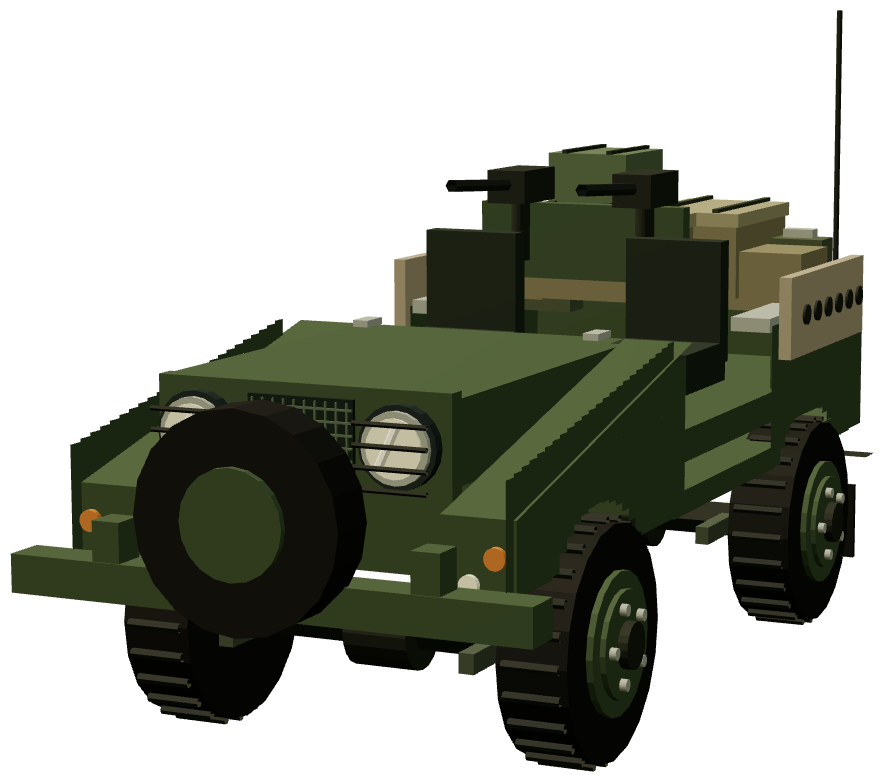
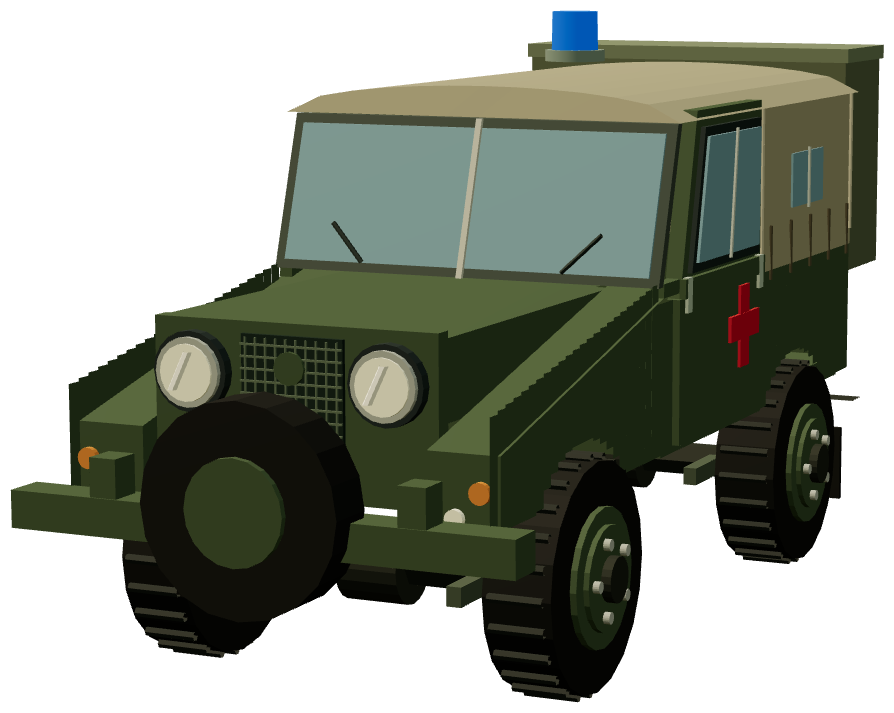
On 7 May 1952 Minerva concluded an agreement with the Rover Company to build Land Rovers for the Belgian armed forces. Rover supplied Completely Knocked Down kits — chassis, engine, axles and transmission — and Minerva built its own bodywork in steel rather than Solihull's aluminium, to Belgian Army requirements, with about 63 per cent local content and roughly 500 skilled workers turning out up to fifty vehicles a day. Because Minerva could not press the compound-curve front wings, it substituted folded flat panels, giving the Minerva TT ('Tout Terrain') its distinctive sloping nose. Rover records show 8,959 CKD kits despatched between 1952 and 1956, including around 1,100 of the later 86-inch model; alongside the standard cargo and personnel vehicles Minerva produced station wagons, hardtops, truck cabs, field ambulances and armoured assault variants, and offered civilian versions from October 1953.
The relationship soured. In September 1954 Minerva sued Rover for breach of contract; a settlement negotiated between Spencer Wilks and L. Farmer provided a further 900 vehicles at favourable prices, which became the 1955-56 production, and all contracts ended in June 1956. Minerva announced C-20 and M-20 models of its own in 1956 but got no further than prototypes, and the company fell into liquidation in 1958. Minerva TTs nevertheless served the Belgian forces at home, in Korea and in the Congo, and the Para-Commandos ran theirs into the late 1980s. The name is kept alive today by the Minerva Heritage Foundation, a Belgian non-profit, and is not the original company.
Imagery
Vehicles in this registry (2)


Sources & citations
- Minerva (automobile) — Sylvain de Jong founds the business at Antwerp in 1897; Société Anonyme Minerva Motors 1903 at Berchem; bicycles, motorcycles, luxury cars and WWI military vehicles; Société Nouvelle Minerva and the 1934 Impéria merger; licensed Land Rover 80" TT for the Belgian forces; defunct 1958 after the licensing dispute; Minerva Heritage Foundation today ↗ — Wikipedia (accessed 2026-09-10)
- The Minerva 4×4 story – 1951-58 (Standard Vanguard assembly at Mortsel; ~500 workers and 50 vehicles a day; 63% local content; September 1954 legal action against Rover and the 900-vehicle settlement; contracts ended June 1956; 8,959 CKD kits; ~1,100 86-inch; civilian variants from October 1953; C-20 and M-20 announced 1956; liquidation 1958) ↗ — Land Rover Series One Club (accessed 2026-09-10)
- MLR Pt.55 ~ Minerva TT Belgian-built Series One Land Rovers (agreement of 7 May 1952; steel bodies; Belgian service at home, in Korea and the Congo; Para-Commando use into the late 1980s) ↗ — Joint Forces News (Bob Morrison) (accessed 2026-09-10)
Maker record updated 2026-09-10T04:48:16.006Z · status: researched