MIRA Ltd
The Motor Industry Research Association, founded in 1946 and operating the great British proving ground on the former RAF Lindley airfield near Nuneaton. Its unmanned ground vehicle arm converted surplus Snatch Land Rovers into the remotely driven Panama IED-detection vehicles for Afghanistan under a £15 million MoD contract, using its own MACE control system.
History
MIRA began in 1946 as the Motor Industry Research Association, a co-operative research body formed to consolidate British automotive research after the war, with roots reaching back through the Institution of Automobile Engineers to the Cycle Engineers' Institute of 1898. It took over the disused RAF Lindley airfield near Nuneaton in Warwickshire — chosen for sitting between the main manufacturing centres — and made the facilities available to member companies in October 1948, formally opening on 28 April 1949. The test tracks at first were simply the old runways; the Belgian pavé road followed in 1950 and an indoor crash-test facility in 1968, driven by the largest industrial linear induction motor in Britain, designed by Professor Eric Laithwaite.
The organisation moved from a membership subscription model to selling services for fees in 1975, and in 2001 was reconstituted as MIRA Ltd. It became a broad engineering, research, testing and certification consultancy to the world transport industry from the 850-acre site now called MIRA Technology Park, and in 2015 was acquired by the Japanese test-equipment maker HORIBA, becoming HORIBA MIRA Ltd.
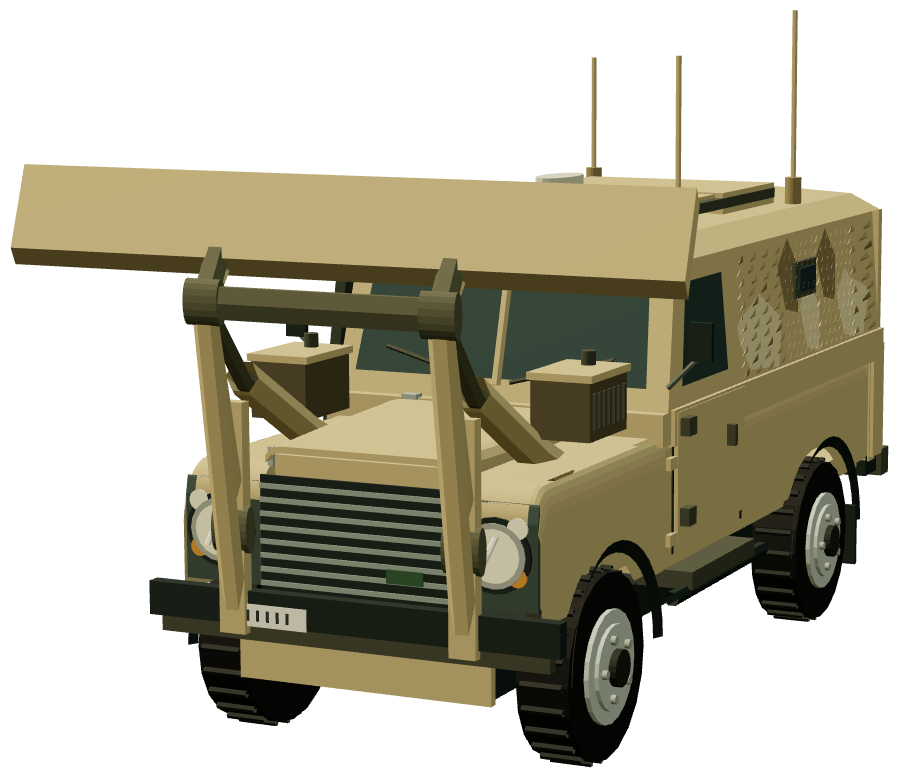
Defence work grew alongside the automotive business, particularly in unmanned ground vehicles built around MIRA's own MACE control system, which allows a vehicle to be driven by remote control or autonomously at ranges up to about 20 km. That capability produced the Panama. In 2010-11 the Ministry of Defence, under an urgent operational requirement run by Defence Equipment and Support with PA Consulting Group, selected MIRA's unmanned Snatch proposal ahead of bids from BAE Systems and Marshall Land Systems in a contract reported at £15 million, with Thales UK and Exponent supporting systems integration. Surplus CAV-100 Snatch Defender 110s — withdrawn from patrol work and awaiting disposal — were converted for remote operation and fitted with a boom-mounted ground-penetrating radar and mast cameras.
About a dozen conversions went into service in Helmand from 2011, working at the head of Royal Engineers Talisman route-clearance groups: towed to the search area behind a Buffalo, unhitched without exposing the crew, then driven by remote control from inside a Mastiff. The whole programme, reported at around £50 million, ran from investment decision to operational use in eleven months and came in £9 million under budget. The fleet was withdrawn after UK combat operations ended and surplus vehicles were sold through MoD disposal agents.
Vehicles in this registry (1)
Sources & citations
- MIRA Ltd. (established 1946 as the Motor Industry Research Association; roots in the Cycle Engineers' Institute of 1898; near Nuneaton, Warwickshire; facilities available to members October 1948, formally opened 28 April 1949; Belgian pavé 1950; 1968 indoor crash-test facility with Eric Laithwaite's linear induction motor; fee-based services from 1975; MIRA Ltd from 2001; acquired by HORIBA in 2015; 850-acre MIRA Technology Park on the former RAF Lindley airfield) ↗ — Wikipedia (accessed 2026-09-10)
- Panama remote controlled vehicle (MIRA selected under a reported £15 million contract ahead of BAE Systems and Marshall Land Systems; MACE remote-control technology; Thales UK and Exponent integration; Snatch donors; Talisman route clearance in Helmand from 2011) ↗ — Wikipedia (accessed 2026-09-10)
- UK Operation Panama active in Afghanistan (programme run by Defence Equipment and Support with PA Consulting Group; ground-penetrating radar on an articulated boom; system of two vehicles plus a ground control station) ↗ — Shephard Media (accessed 2026-09-10)
- MIRA — Unmanned Ground Vehicles (MACE technology enabling tele-operated and autonomous operation at up to 20 km, used by the British Army in Panama, first deployed in theatre in 2011) ↗ — Crunchbase (accessed 2026-09-10)
Maker record updated 2026-09-10T05:17:07.280Z · status: researched