101FC Radio Body
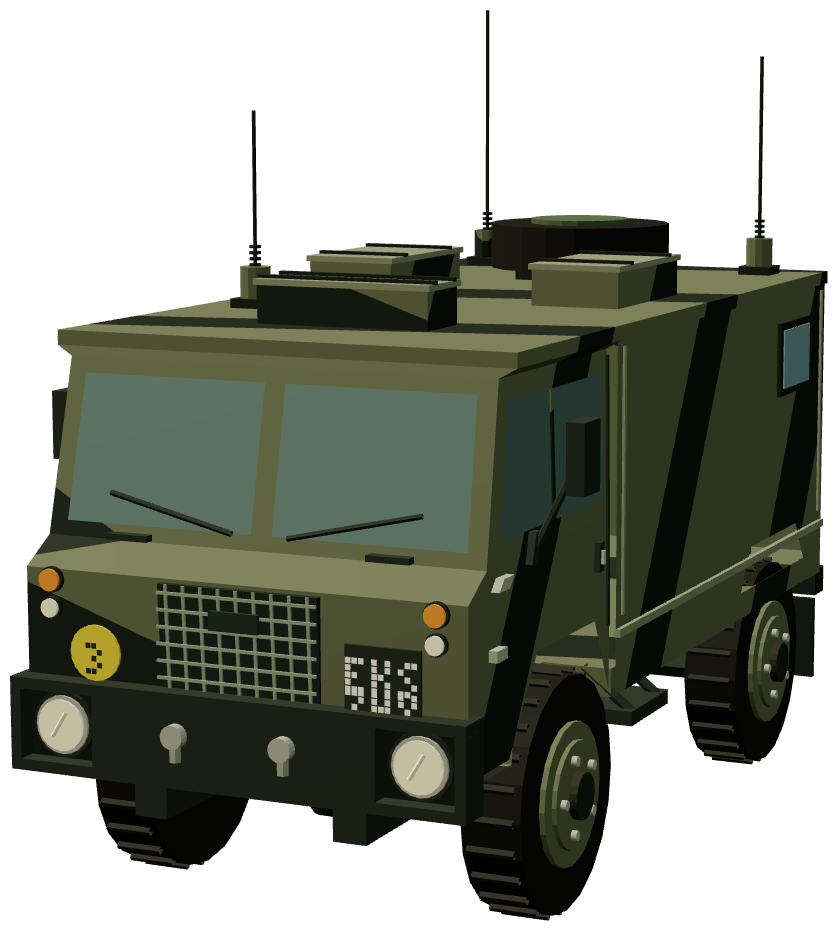
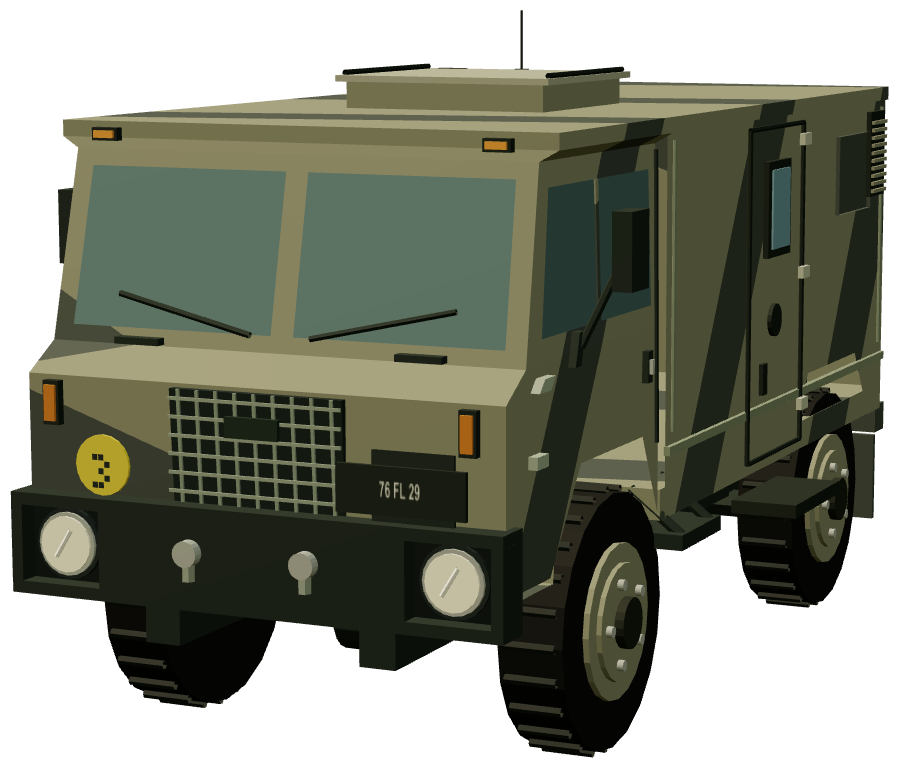
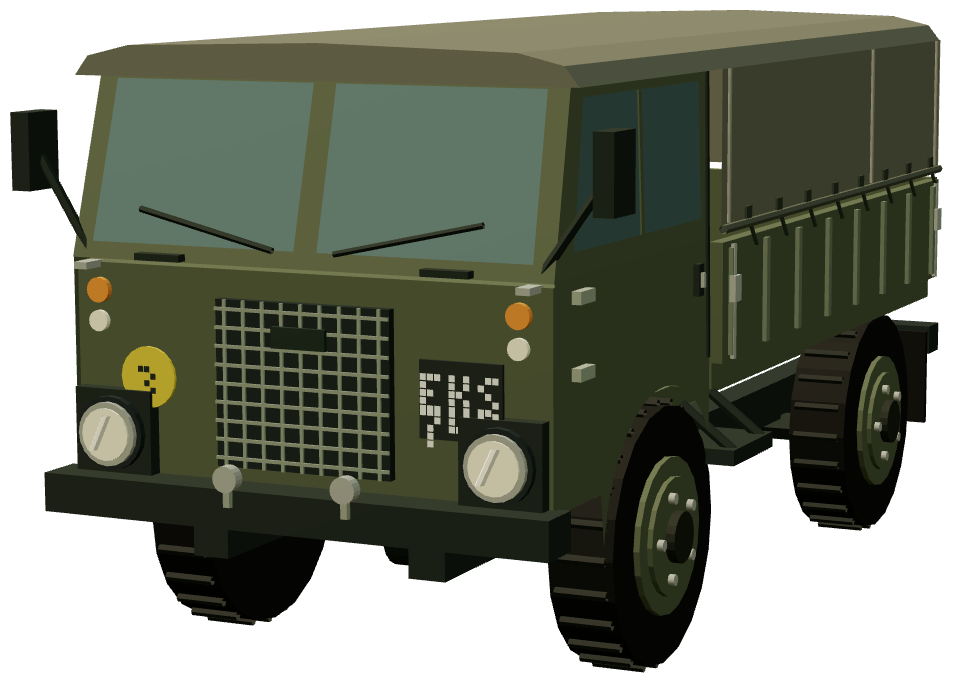
The radio-bodied 101 Forward Control: a demountable box body on the V8 cab-over chassis, almost always wired for 24 volts to match British Army radio sets, used as a signals vehicle and command post and later as the basis for the Vampire electronic warfare conversions.
Factory colours
- Deep Bronze Green
- NATO Green (IRR)
Codes on hover. Hex values are representative approximations of period paint unless a source states a measured value.
History
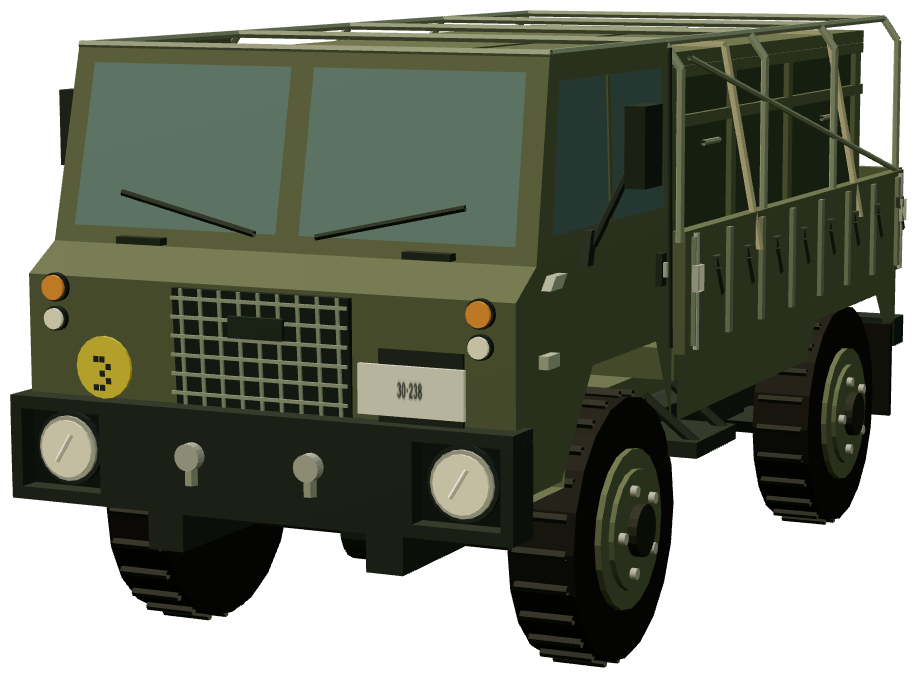
The 101 Forward Control left Solihull as a soft-top general service gun tractor, and the box-bodied versions came afterwards. Land Rover had borrowed the demountable panel idea from the experimental Lightweight during the 101's development precisely so that the vehicle could be re-roled, and the radio body was the result: a hard box over the rear of the 101-inch chassis, entered from the back, fitted out as a signals vehicle or command post.
Almost every radio-bodied 101 was wired for 24 volts. British Army radio sets of the period ran at 24 volts, so the vehicles were built to the same voltage to keep the batteries charged; of roughly 150 radio bodies, only about six are thought to have been 12-volt. The factory's own production breakdown for 1972–78 lists 170 right-hand-drive and 465 left-hand-drive 24-volt vehicles plus a further 92 for export, though those totals cover Fitted For Radio soft-tops as well as box bodies.
Under the body the vehicle is the standard 101: a 3.5-litre Rover V8 mounted under and behind the cab, four-speed LT95 gearbox with permanent four-wheel drive, 101-inch wheelbase and 9.00×16 tyres, built to be air-portable in an RAF Andover and light enough to be underslung from a heavy-lift helicopter.
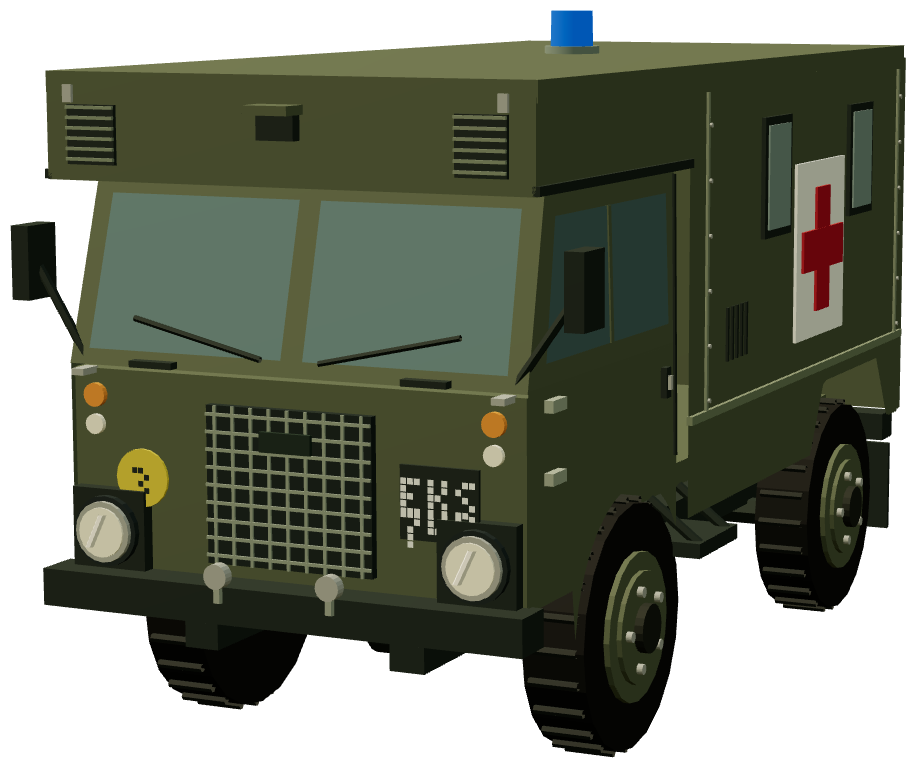
Radio bodies served with the Royal Signals and with artillery and air defence units through the 1980s and 1990s. A batch was taken back into UK workshops and converted into the screened, mast-equipped Vampire electronic warfare vehicles for 14 Signal Regiment. The 101 fleet was almost entirely withdrawn by the end of 1998, the ambulance-bodied vehicles going last in 1999, and box-bodied survivors are now common among collectors — several having been turned into campers and expedition vehicles.
Registry record
- Manufacturer
- Land Rover (British Leyland), Solihull
- Manufactured
- 101 production 1972–1978 (the bulk 1975–77); radio bodies in service into the 1990s
- Engine type
- 3.5 L Rover V8 petrol, four-speed LT95 gearbox, permanent four-wheel drive, 24-volt electrics
- Production run
- ~150 radio bodies (all but about six of them 24 volt), from about 2,660 101s built
- Country of origin
- United Kingdom
- Status
- withdrawn from British service by the end of 1998; widely preserved
Catalogue data
- Record kind
- Named model
- Family
- 101-forward-control
- Wheels
- 4
- Nominal wheelbase
- 101″
Catalogue fields describe the vehicle's structure and body as this registry records it. They are not certified factory measurements, and no performance figures are published here.
Related base model variants
Sources & citations
Researched sources
- 101 Forward Control 'Radio' — about 150 radio bodies with only six at 12 volt, the 24-volt rationale, and conversion of radio-body FFR 101s into the electronic warfare vehicles sent to Germany ↗ — Land Rover UK Forums (accessed 2026-09-10)
- The 101 Forward Control — the MVEE gun tractor requirement, demountable panels borrowed from the Lightweight, the 1972–78 production table (2,660 vehicles, including 24-volt batches) and withdrawal by the end of 1998 ↗ — Ex-Military Land Rover Association (accessed 2026-09-10)
- Land-Rover 101, the Military Forward Control Land-Rover and Powered Trailer — 'the standard 101 is a soft-top although radio vans and ambulances came later. The radio vehicles had 24-volt electrical systems.' Prototype and production specifications ↗ — allisons.org (accessed 2026-09-10)
- Land Rover 101 Forward Control — 1972–78 production, 3.5 V8 under and behind the cab, 9.00×16 tyres, radio communication trucks among the body variants, and replacement by Defenders and Pinzgauers in the late 1990s ↗ — Wikipedia (accessed 2026-09-10)
Catalogue references
- https://encrypted-tbn0.gstatic.com/images?q=tbn:ANd9GcQAWYeQRZQjq9xCLTEFpcjPmj1H407aT7AJ3Hw1_CoC3D5wnzGTZwg6AGxx&s=10 https://encrypted-tbn0.gstatic.com/images?q=tbn:ANd9GcQAWYeQRZQjq9xCLTEFpcjPmj1H407aT7AJ3Hw1_CoC3D5wnzGTZwg6AGxx&s=10 ↗
Registry record updated 2026-09-10T10:41:31.356Z · status: researched