Defender 90
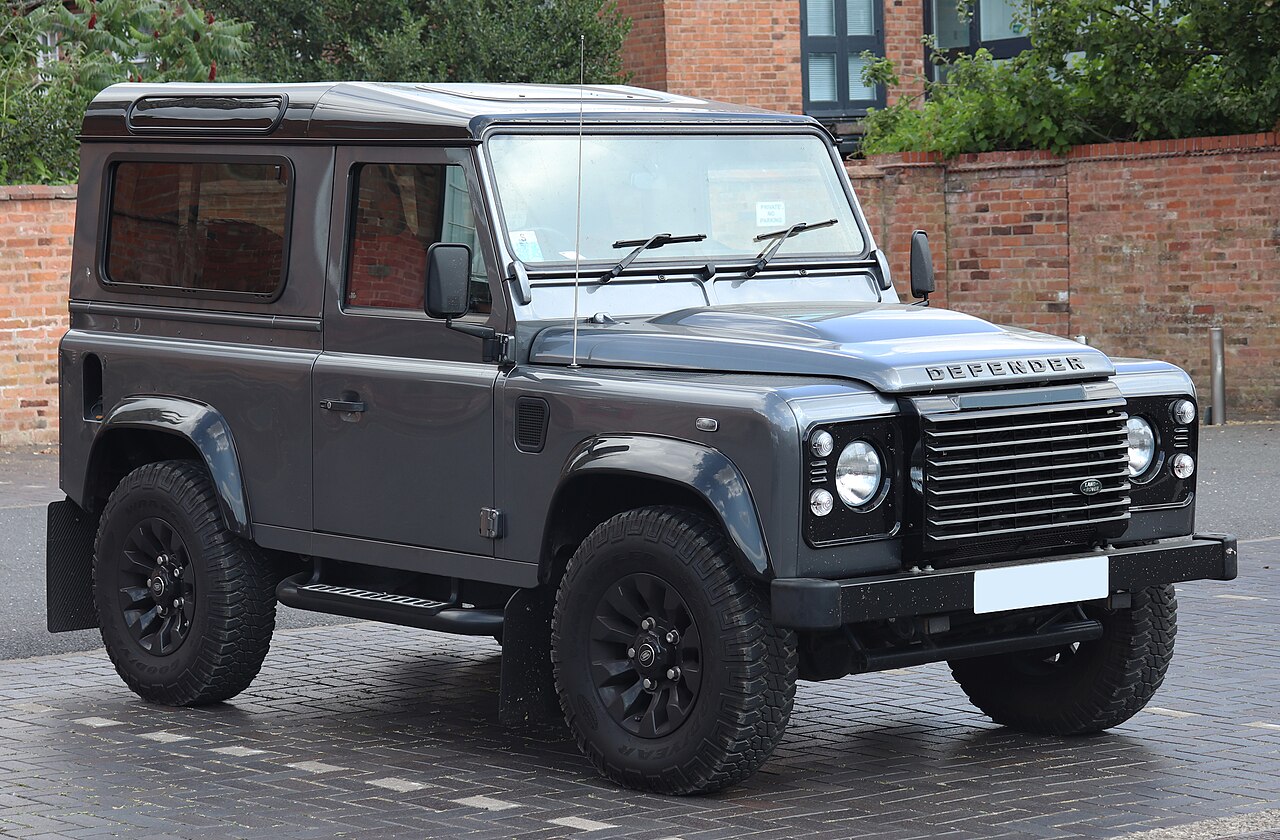
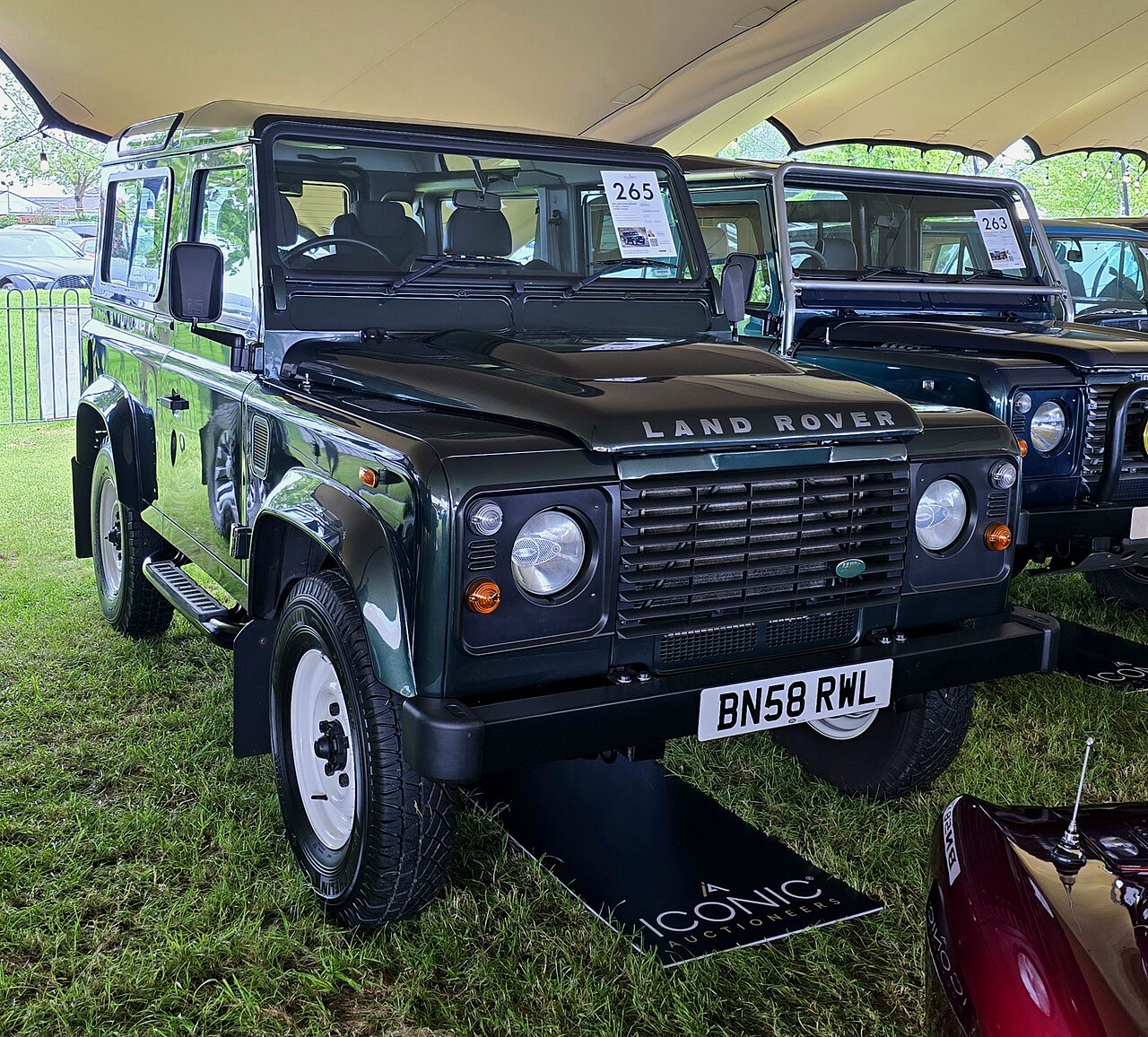
The short-wheelbase member of Land Rover's coil-sprung utility line, launched as the Ninety in 1984 and badged Defender 90 from 1990 until production ended in January 2016 — the last Defender built was a 90 Heritage soft top.
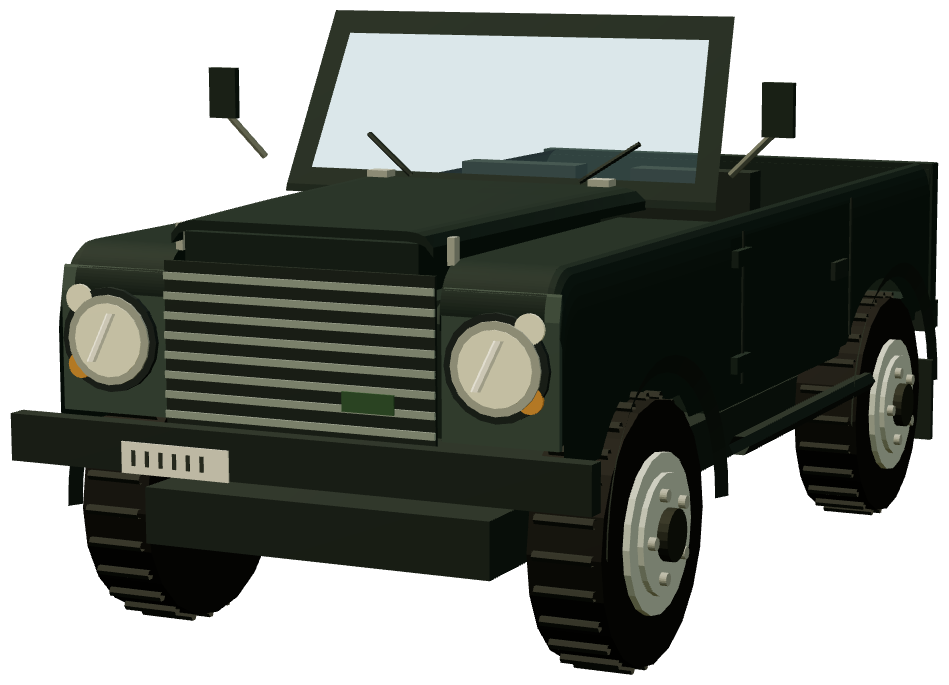
Variants
of this base modelFactory colours
pick one to repaint the rendersCodes on hover. Hex values are representative approximations of period paint unless a source states a measured value.
History
Land Rover replaced its leaf-sprung Series models with an all-new coil-sprung chassis in 1983, launching the One Ten — named for its 110-inch wheelbase — with permanent four-wheel drive, a one-piece windscreen and wind-up windows, but body panels and outline barely changed from the Series III. The short-wheelbase Ninety followed in 1984 on a nominal 90-inch (actually 92.9-inch) wheelbase, and from 1985 the stretched Land Rover 127 joined the range, built as a crew-cab and chassis-cab platform for heavy utility bodywork. Engines at first carried over from the Series line — 2.25-litre (soon 2.5-litre) petrol and diesel four-cylinders and the 3.5-litre Rover V8 — with a turbocharged Diesel Turbo arriving in 1986.
When the Discovery arrived in 1989 the original Land Rover needed a name of its own, and for the 1991 model year the One Ten, Ninety and 127 became the Defender 110, 90 and 130 — the 130 keeping its 127-inch wheelbase despite the tidier badge. The renaming came with a major mechanical upgrade: the 200Tdi, a 2.5-litre direct-injection intercooled turbodiesel developed for the Discovery, which gave the Defender usable motorway pace and modern fuel economy for the first time.
The engine line then marked out the Defender's generations: the refined 300Tdi replaced the 200Tdi in 1994, the five-cylinder electronically-managed Td5 followed in 1998, and from spring 2007 the Ford 2.4-litre Duratorq TDCi ('Puma') arrived with a six-speed gearbox and a redesigned interior, downsized to a 2.2-litre for the 2012 model year to meet emissions rules. Through all of it the Defender remained the working Land Rover — farm hack, military workhorse, expedition truck and aid-agency staple — assembled at Solihull with construction fundamentally unchanged from 1983.
The 130 stood slightly apart from its shorter siblings: sold almost exclusively as a chassis-cab, crew-cab or high-capacity pickup rather than a station wagon, it carried dropside bodies, box ambulances and fire pumps, and its double-cab-plus-tray layout made it the standard platform for utility fleets and military ambulance conversions.
Defender production ended on 29 January 2016, when the 2,016,933rd vehicle of the Series/Defender line — a soft-top Defender 90 Heritage registered H166 HUE, echoing the first pre-production Land Rover HUE 166 — rolled off the Solihull line after 68 years of continuous production. The all-new Defender (L663) unveiled in September 2019 and on sale from 2020 is a distinct, monocoque successor; this registry's records cover the classic coil-sprung line.
Imagery


Registry record
- Manufacturer
- Land Rover
- Manufactured
- 1984–2016 (Ninety from 1984; badged Defender 90 from 1990)
- Engine type
- 2.25/2.5 L petrol and diesel fours and 3.5 L Rover V8 (Ninety, 1984–1990); 2.5 L 200Tdi/300Tdi turbodiesels (1990–1998); 2.5 L Td5 five-cylinder (1998–2007); Ford 2.4 then 2.2 L Duratorq TDCi 'Puma' (2007–2016)
- Production run
- No per-wheelbase totals published; the Series/Defender line together reached 2,016,933 vehicles when production ended in January 2016
- Country of origin
- United Kingdom
- Status
- production ended 2016; succeeded by the 2020 Defender
Catalogue data
- Record kind
- Base model
- Model line
- Defender
- Family
- Defender
- Wheels
- 4
- Nominal wheelbase
- 90″
- Body style
- No roof
- Variants
- 7
Base catalogue fields are exported from the Difflocked game. In-game physics values are arcade tuning, not certified historical measurements, and are deliberately not shown as specifications here.
Sources & citations
Researched sources
- Land Rover Defender ↗ — Wikipedia (accessed 2026-09-09)
- Land Rover Defender production at Solihull comes to an end ↗ — Motor Authority (accessed 2026-09-09)
- The Last Land Rover Defender ↗ — Expedition Portal (accessed 2026-09-09)
- A Travel Guide to Land Rover Colors ↗ — Rovers North / roverparts.com (accessed 2026-09-09)
- Land Rover Defender Paint Options (colour code cross-reference and chip sheets) ↗ — PaintRef (accessed 2026-09-09)
Development reference notes
Series I front body review — series1-bronze and Series I configurations · HERITAGE-FLEET-REFERENCES.md
User photographs `s1.jpeg`, `imagesj.jpeg`, `25109914-1-55.jpg` and `s1_.jpeg` show the early Series I front: a narrow central wire-mesh radiator grille with inboard headlamps, broad flat-sided wings rolling over a long front radius, one small white sidelight per wing, and a bonnet tapering forward with rounded long side pressings. The shared Series I builder uses these proportions for both wheelbases. This is a visual reference interpretation, not a measured CAD scan.
Series III front review — standard Series III configurations · HERITAGE-FLEET-REFERENCES.md
User references `hfhimages.jpeg`, `imagesl.jpeg`, and `IMG_1992-jpg.webp` show the tall tapered central plastic grille with shorter side vents, recessed radiator panel, broad wings with rounded leading edges, inboard wing headlamps and white sidelights above amber indicators. The standard Series III bonnet narrows toward the grille. Stage 1 V8 and Santana retain their distinct flush-front grilles. Meteor Works uses a **Series III front**, not the Series IIA front of the army and RAF Marshall ambulances. Its internal `marshal-series3` shell shares the Marshall coachwork but inherits Series III wings, bonnet, grille, headlamps and outer lamps. Meteor adds only its weathered livery, guard and emergency equipment around that standard front, avoiding duplicated headlamp pods. ### Coachwork front-panel corrections - Dobbo and the Marshall family (including Meteor Works and RAF rescue) retain clipped curved side skins through the front wings and doors at their custom body joins. - Queen Elizabeth II’s Series IIA station wagon uses the Series III-style wing-mounted headlights, bonnet and broad black grille shown in the supplied reference. No numberplate is modelled. Reference: `/Users/jo
Registry record updated 2026-09-09T06:24:29.255Z · status: researched