Range Rover P38
The second-generation Range Rover of 1994-2001, developed as project 38A under Rover Group and launched just after BMW's takeover, with 4.0/4.6 Rover V8 or BMW six-cylinder diesel power and standard electronic air suspension.
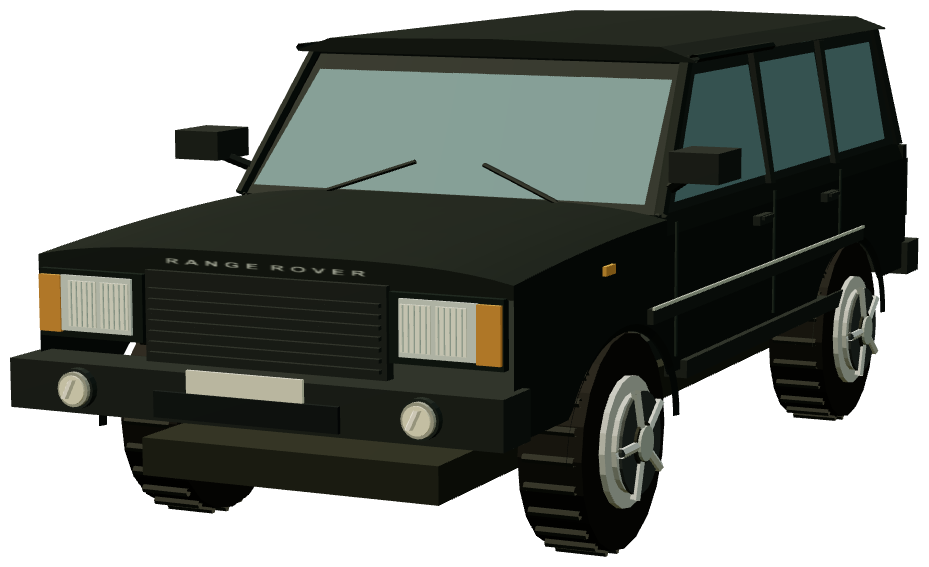
Factory colours
pick one to repaint the rendersCodes on hover. Hex values are representative approximations of period paint unless a source states a measured value.
History
Replacing the original Range Rover was Land Rover's biggest gamble of the early 1990s. The programme began as 'Pegasus' and became known by the number of the Solihull building where the team worked - 38A - which stuck as the model's name. Designer George Thomson's 1990 exterior deliberately evolved the Classic's cues (the floating roof, clamshell bonnet and split tailgate) around a far more luxurious cabin, while the engineering kept a separate ladder chassis and beam axles but made electronic air suspension standard across the range.
The P38A was launched on 28 September 1994, months after BMW had acquired the Rover Group, making the new Range Rover the flagship of a German-owned British marque. Engines were reworked 4.0 and 4.6-litre versions of the veteran Rover V8 plus, for the first time in a Range Rover, a six-cylinder diesel - the 2.5-litre turbocharged BMW M51. Trim lines ran from the 4.0 base model to the 4.6 HSE, with bespoke Autobiography editions offering near-unlimited paint and leather choices.
In its seven-year run the P38A sold steadily - 167,259 are recorded as built at Solihull to 2001 - but it never quite escaped the twin shadows of its beloved predecessor and its troubled electronics, which have shaped its reputation on the used market ever since. Jeremy Clarkson famously likened the tall glasshouse styling to a London Metrocab taxi. BMW sold Land Rover to Ford in 2000, and the P38A was replaced in late 2001 by the BMW-developed L322.
Today the P38A is the affordable route into Range Rover ownership and increasingly appreciated on its own terms: the last Range Rover with the Rover V8, a separate chassis and genuinely simple mechanicals beneath the electronic gadgetry.
Imagery
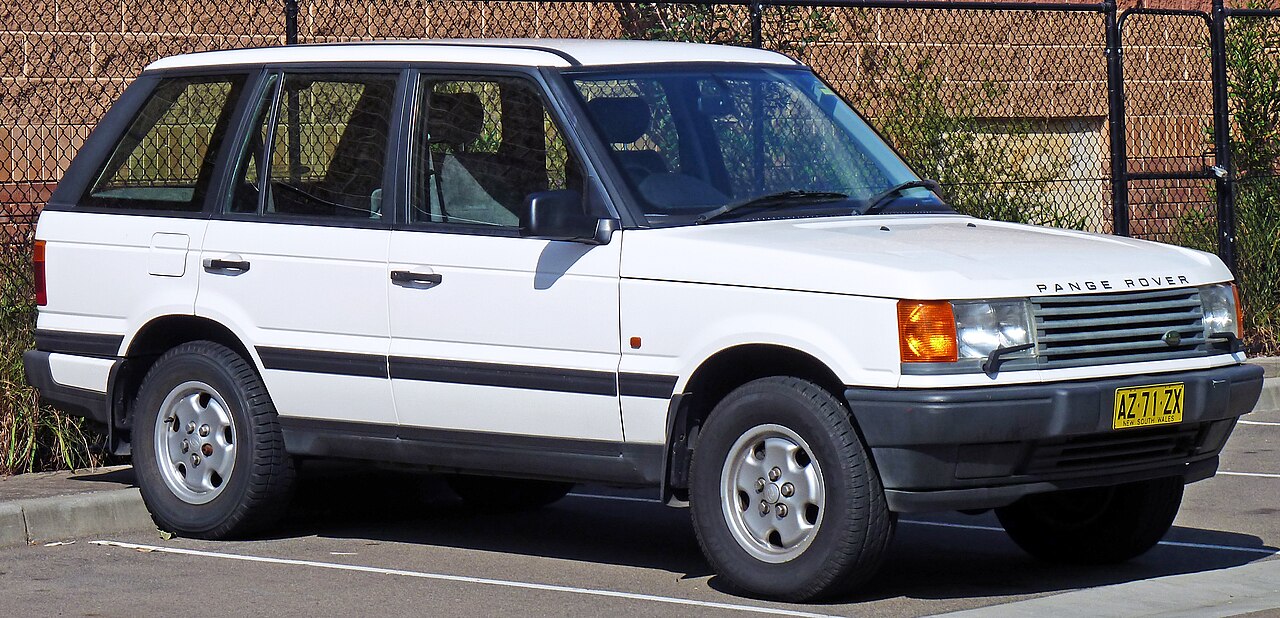
_4.0_SE_wagon_05.jpg)
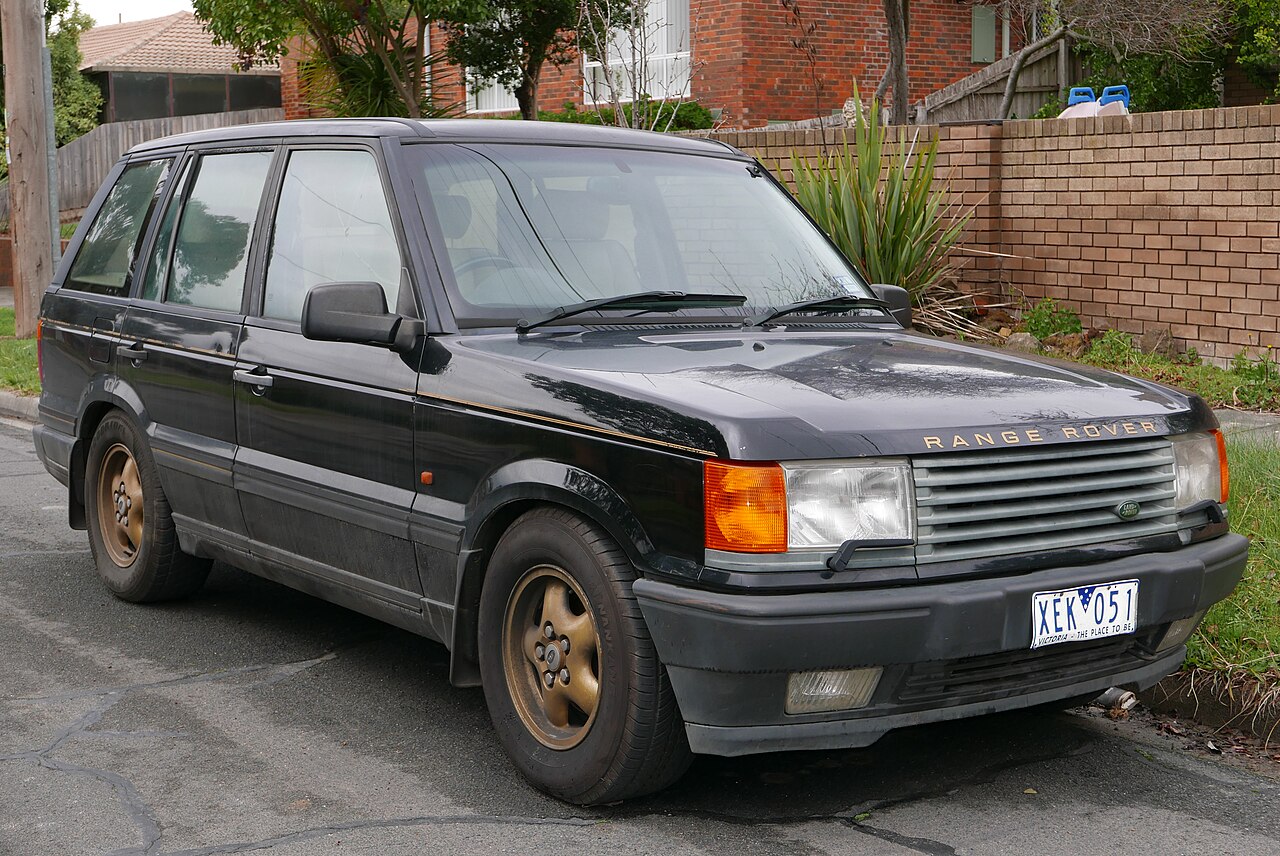
_4.6_HSE_wagon_(2015-08-07)_01.jpg)
Registry record
- Manufacturer
- Land Rover (Rover Group, under BMW ownership 1994-2000, then Ford)
- Manufactured
- 1994–2001
- Engine type
- 4.0 and 4.6 L Rover V8 petrol; 2.5 L BMW M51 turbodiesel inline-six
- Production run
- ~167,259 vehicles (Wikipedia's compiled figure, 1994-2001)
- Country of origin
- United Kingdom
- Status
- out of production
Catalogue data
- Record kind
- Base model
- Model line
- P38 (P38A)
- Family
- Range Rover P38A
- Wheels
- 4
- Body style
- Range Rover P38
- Variants
- 1
Base catalogue fields are exported from the Difflocked game. In-game physics values are arcade tuning, not certified historical measurements, and are deliberately not shown as specifications here.
Sources & citations
Researched sources
- Range Rover (P38A) ↗ — Wikipedia (accessed 2026-09-09)
- Range Rover P38 development story - how Rover replaced a classic icon ↗ — AROnline (accessed 2026-09-09)
- Range Rover P38 (1994-2002): The successor to the throne turns 30 ↗ — Motor1 (accessed 2026-09-09)
- Range Rover P38 (94-01) paint key ↗ — Rimmer Bros (accessed 2026-09-09)
Development reference notes
Series I front body review — series1-bronze and Series I configurations · HERITAGE-FLEET-REFERENCES.md
User photographs `s1.jpeg`, `imagesj.jpeg`, `25109914-1-55.jpg` and `s1_.jpeg` show the early Series I front: a narrow central wire-mesh radiator grille with inboard headlamps, broad flat-sided wings rolling over a long front radius, one small white sidelight per wing, and a bonnet tapering forward with rounded long side pressings. The shared Series I builder uses these proportions for both wheelbases. This is a visual reference interpretation, not a measured CAD scan.
Series III front review — standard Series III configurations · HERITAGE-FLEET-REFERENCES.md
User references `hfhimages.jpeg`, `imagesl.jpeg`, and `IMG_1992-jpg.webp` show the tall tapered central plastic grille with shorter side vents, recessed radiator panel, broad wings with rounded leading edges, inboard wing headlamps and white sidelights above amber indicators. The standard Series III bonnet narrows toward the grille. Stage 1 V8 and Santana retain their distinct flush-front grilles. Meteor Works uses a **Series III front**, not the Series IIA front of the army and RAF Marshall ambulances. Its internal `marshal-series3` shell shares the Marshall coachwork but inherits Series III wings, bonnet, grille, headlamps and outer lamps. Meteor adds only its weathered livery, guard and emergency equipment around that standard front, avoiding duplicated headlamp pods. ### Coachwork front-panel corrections - Dobbo and the Marshall family (including Meteor Works and RAF rescue) retain clipped curved side skins through the front wings and doors at their custom body joins. - Queen Elizabeth II’s Series IIA station wagon uses the Series III-style wing-mounted headlights, bonnet and broad black grille shown in the supplied reference. No numberplate is modelled. Reference: `/Users/jo
Registry record updated 2026-09-09T10:17:13.813Z · status: researched