Range Rover Classic
The original luxury 4x4: launched in June 1970 as 'A Car For All Reasons', the two-door Range Rover paired the Rover V8 with long-travel coil springs and permanent four-wheel drive, and stayed in production for 26 years.
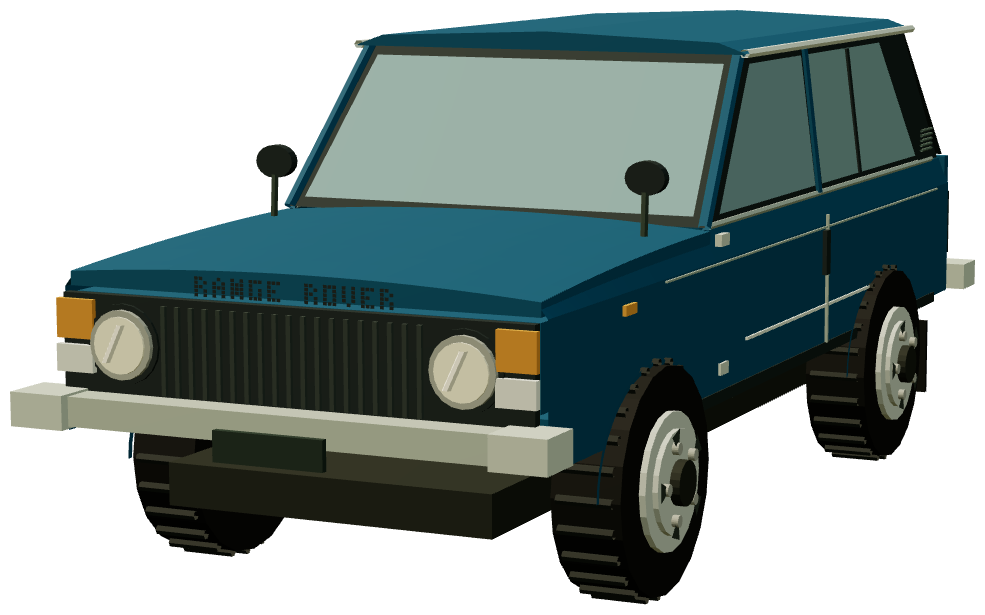
Factory colours
pick one to repaint the rendersCodes on hover. Hex values are representative approximations of period paint unless a source states a measured value.
History
The Range Rover grew out of Rover's late-1960s '100-inch station wagon' project, developed by Charles Spencer King and Gordon Bashford to combine Land Rover capability with saloon-car pace and comfort. Twenty-six development prototypes were badged 'VELAR' to disguise the project, and the finished car was presented to the press in June 1970 in Cornwall, with twenty launch vehicles finished in Masai Red, Davos White, Tuscan Blue and Lincoln Green. The specification was radical for 1970: an all-aluminium 3.5-litre V8, permanent four-wheel drive, all-round disc brakes and long-travel coil suspension under a crisp two-box body styled largely by the engineering team.
For its first eleven years the Range Rover was only a two-door, and its early character was surprisingly utilitarian, with vinyl trim and hose-out ambitions. Demand ran ahead of supply through the 1970s under British Leyland, and the car steadily moved upmarket after Land Rover Ltd was created as a standalone division in 1978: a four-door body arrived in 1981, automatic transmission in 1982, and a procession of luxury editions followed. Diesel power arrived in 1986 with VM Motori engines, the V8 grew to 3.9 litres in 1989 and 4.2 litres in the 1992 long-wheelbase LSE (County LWB in the US), and 1992 also brought electronic air suspension and Land Rover's own 200Tdi diesel.
The Range Rover finally reached the United States officially in 1987, where it cemented the model's luxury positioning. When the second-generation P38A arrived in September 1994, the original car was renamed 'Range Rover Classic' and continued alongside it in run-out form until February 1996. Total production is usually quoted at 317,615 vehicles, though Wikipedia's compiled figure is 326,070; assembly was centred on Solihull with CKD operations including Australia and Venezuela.
The Classic's blend of ability and understatement made it a cultural landmark - exhibited at the Louvre, winner of the first Paris-Dakar in 1979 in modified form, and the template for every luxury SUV since.
Imagery
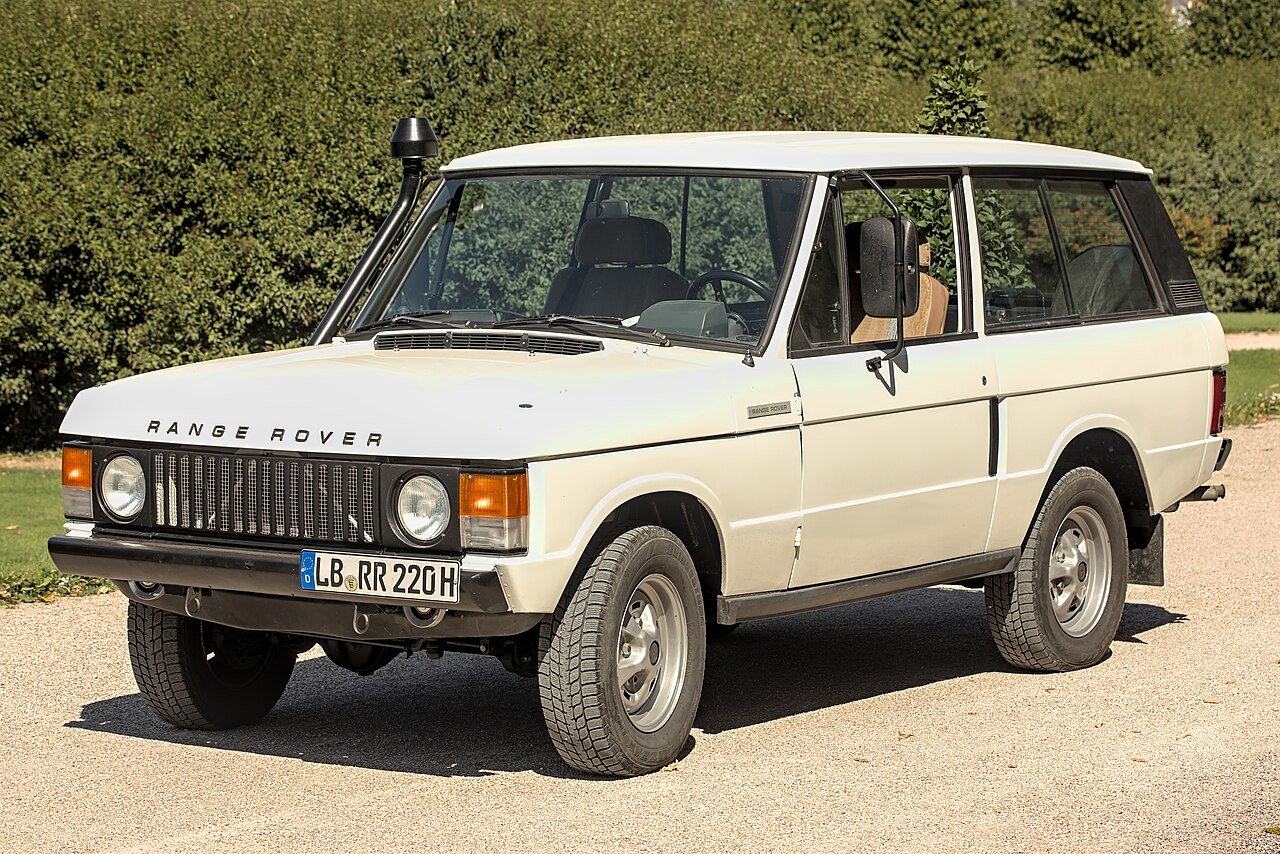
_Classic-Gala_2022_1X7A0287.jpg)
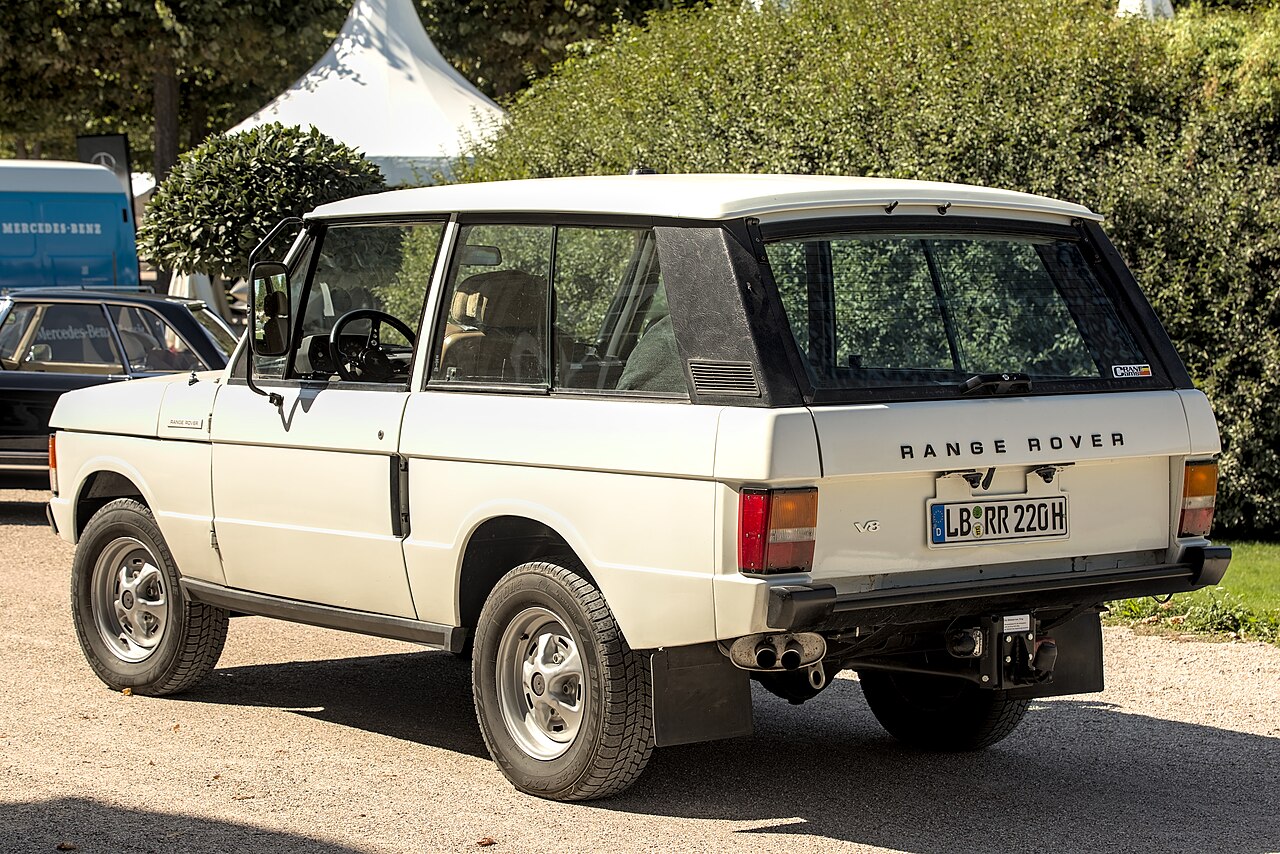
_Classic-Gala_2022_1X7A0286.jpg)
Registry record
- Manufacturer
- Rover / Land Rover (British Leyland to 1978, then Land Rover Ltd, latterly Rover Group)
- Manufactured
- 1970–1996
- Engine type
- 3.5, 3.9 and 4.2 L Rover V8 petrol; 2.4/2.5 L VM and 2.5 L 200Tdi/300Tdi diesels
- Production run
- ~317,615 vehicles (widely cited; Wikipedia's compiled total is 326,070)
- Country of origin
- United Kingdom
- Status
- out of production
Catalogue data
- Record kind
- Base model
- Model line
- Classic
- Family
- Range Rover Classic
- Wheels
- 4
- Body style
- Range Rover Classic
- Variants
- 1
Base catalogue fields are exported from the Difflocked game. In-game physics values are arcade tuning, not certified historical measurements, and are deliberately not shown as specifications here.
Sources & citations
Researched sources
- Range Rover Classic ↗ — Wikipedia (accessed 2026-09-09)
- Craft: Range Rover (twenty 1970 press-launch cars in four colours) ↗ — 1of.it (accessed 2026-09-09)
- There's only one Number One… (launch history) ↗ — Land Rover Monthly (accessed 2026-09-09)
- Range Rover Classic buyer's guide (production total 317,615) ↗ — Classics World (accessed 2026-09-09)
- Range Rover Classic | Vehicle History ↗ — John Craddock Ltd (accessed 2026-09-09)
Development reference notes
Series I front body review — series1-bronze and Series I configurations · HERITAGE-FLEET-REFERENCES.md
User photographs `s1.jpeg`, `imagesj.jpeg`, `25109914-1-55.jpg` and `s1_.jpeg` show the early Series I front: a narrow central wire-mesh radiator grille with inboard headlamps, broad flat-sided wings rolling over a long front radius, one small white sidelight per wing, and a bonnet tapering forward with rounded long side pressings. The shared Series I builder uses these proportions for both wheelbases. This is a visual reference interpretation, not a measured CAD scan.
Series III front review — standard Series III configurations · HERITAGE-FLEET-REFERENCES.md
User references `hfhimages.jpeg`, `imagesl.jpeg`, and `IMG_1992-jpg.webp` show the tall tapered central plastic grille with shorter side vents, recessed radiator panel, broad wings with rounded leading edges, inboard wing headlamps and white sidelights above amber indicators. The standard Series III bonnet narrows toward the grille. Stage 1 V8 and Santana retain their distinct flush-front grilles. Meteor Works uses a **Series III front**, not the Series IIA front of the army and RAF Marshall ambulances. Its internal `marshal-series3` shell shares the Marshall coachwork but inherits Series III wings, bonnet, grille, headlamps and outer lamps. Meteor adds only its weathered livery, guard and emergency equipment around that standard front, avoiding duplicated headlamp pods. ### Coachwork front-panel corrections - Dobbo and the Marshall family (including Meteor Works and RAF rescue) retain clipped curved side skins through the front wings and doors at their custom body joins. - Queen Elizabeth II’s Series IIA station wagon uses the Series III-style wing-mounted headlights, bonnet and broad black grille shown in the supplied reference. No numberplate is modelled. Reference: `/Users/jo
Registry record updated 2026-09-09T10:17:13.745Z · status: researched