Santana 1300
Forward-control 1.3-tonne truck that Santana built at Linares from 1967 to 1978 on the 109-inch Land Rover Santana Series IIA chassis, with the cab and running gear pushed as far forward as possible to free up the load bed. Around 4,000 were made, and unlike Solihull's 101 Forward Control it was sold to the general public.
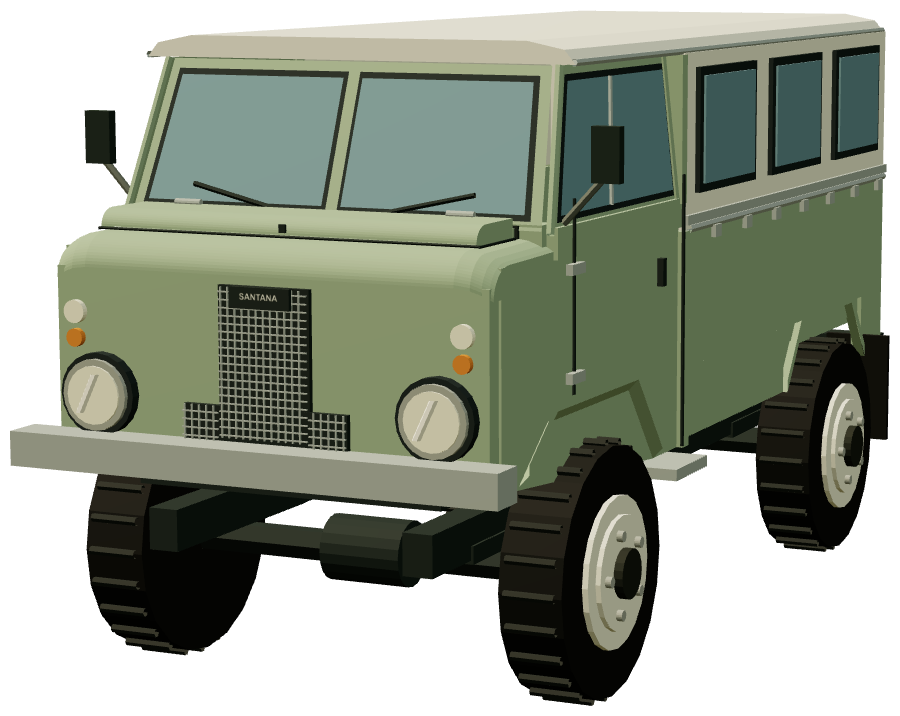
Variants
of this base modelFactory colours
pick one to repaint the rendersCodes on hover. Hex values are representative approximations of period paint unless a source states a measured value.
History
Metalúrgica de Santa Ana, S.A. was registered at Linares, in the province of Jaén, on 24 February 1955, its factory built with Spanish government money meant to industrialise the province. Agricultural machinery was the original plan, but an agreement with Rover followed within a year and the first Spanish-built Land Rovers — Series IIs — reached the market in 1958. The licence relationship lasted until about 1990. Through the 1960s the Spanish company moved from assembling Solihull kits towards complete local manufacture and towards models of its own, aimed at Spanish farmers and at export markets in South America, North Africa and the Middle East that Solihull could not supply.
The 1300 was the first big product of that independence. AROnline's Santana timeline dates the start of production to 1967, in both petrol and diesel forms. Its basis was the long-wheelbase 109-inch Santana Series IIA, but with the cab and mechanicals moved as far forward as the chassis allowed to leave a long, low load area behind — a cab-over-engine layout conceived for much the same job as Britain's Land Rover 101 Forward Control, though developed quite separately and, crucially, sold to anyone who wanted one rather than reserved for the army. The name simply recorded its payload: 1.3 tonnes.
Mechanically it was pure Series IIA. Both 2,286 cc four-cylinder engines were offered — the petrol giving 81 CV at 4,250 rpm on an 8:1 compression ratio, the diesel 62 CV at 4,000 rpm on 23:1 — driving through the standard four-speed-and-transfer-box arrangement. The wheelbase was 2,778 mm, overall length 4,840 mm, and the vehicle weighed 1,760 kg with the petrol engine or 1,840 kg with the diesel. Some vehicles built to order for government bodies received the six-cylinder engine from the donor Santana range. Bodies varied widely: flat trays, dropside and tilt-covered pickups, hard tops, crew cabs and specialist conversions, with fire brigades among the notable users — preserved examples in Madrid fire brigade and Santander colours survive in museum collections.
Production ran to about 4,000 vehicles before the model was replaced in the market by the larger Santana 2000, with a two-tonne payload and a Santana-developed six-cylinder engine, at the end of the 1970s. That makes the 1300 rare today even in Spain, and rarer still abroad. The Linares plant went on to build Suzukis from the mid-1980s and its own Santana 2500 and PS-10/Aníbal, before the Junta de Andalucía closed the company in 2011.
Imagery
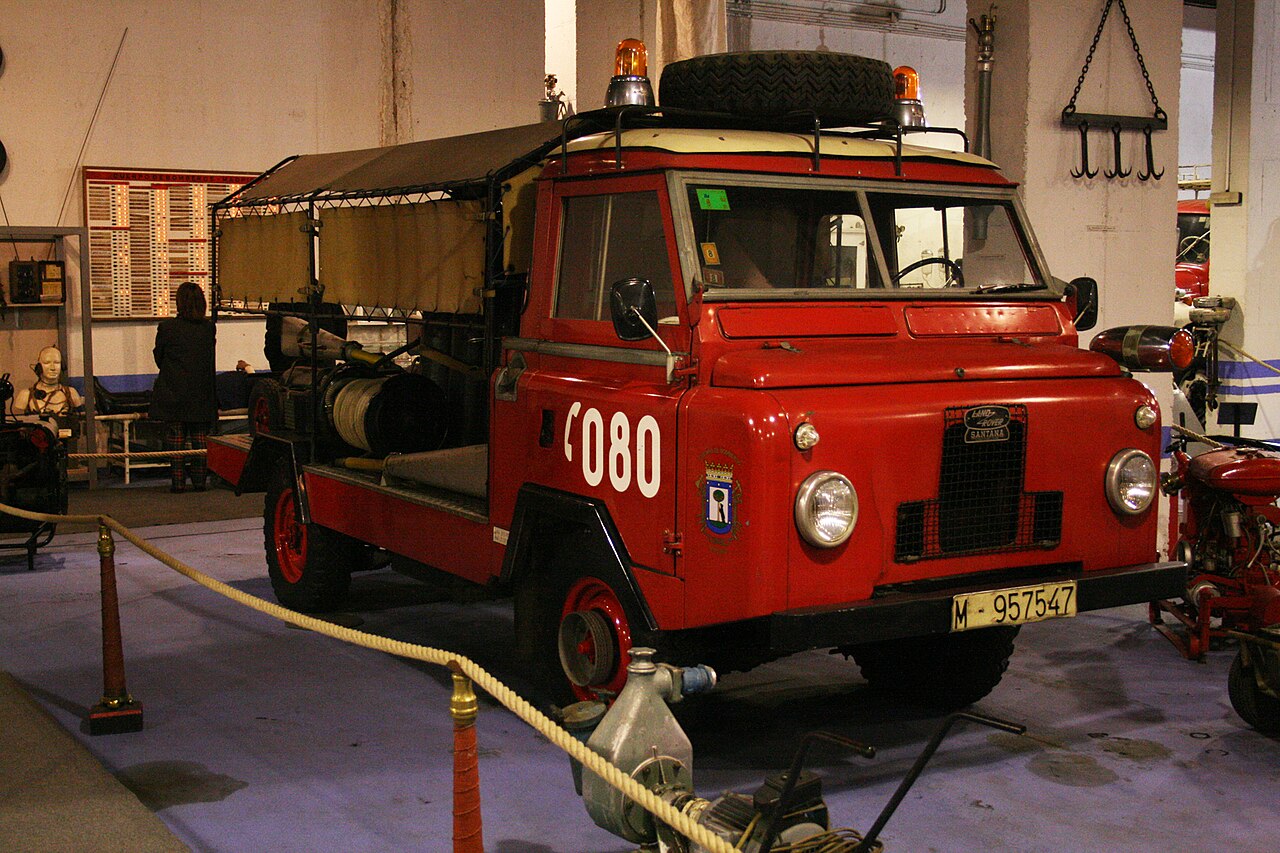

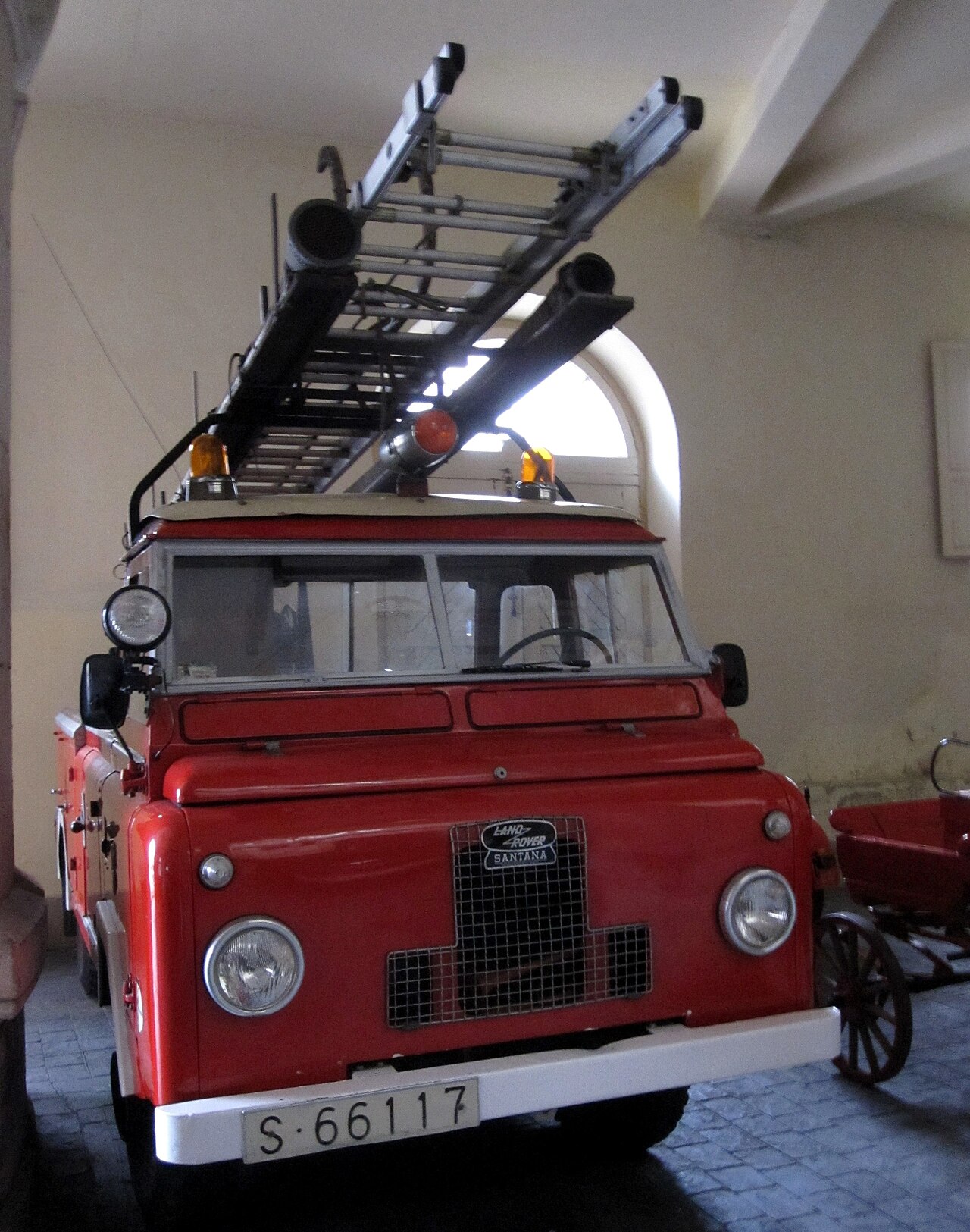
.jpg)
Registry record
- Manufacturer
- Metalúrgica de Santa Ana, S.A. / Land Rover Santana (Linares, Jaén, Spain)
- Manufactured
- 1967–1978
- Engine type
- 2.3 L (2,286 cc) inline-four, petrol 81 CV or diesel 62 CV; a six-cylinder engine was fitted to some government-order vehicles
- Production run
- ~4,000 vehicles
- Country of origin
- Spain
- Status
- out of production
Catalogue data
- Record kind
- Base model
- Model line
- Santana
- Family
- santana1300
- Wheels
- 4
- Body style
- Hard top
- Variants
- 5
Base catalogue fields are exported from the Difflocked game. In-game physics values are arcade tuning, not certified historical measurements, and are deliberately not shown as specifications here.
Sources & citations
Researched sources
- Santana 1300 ↗ — Wikipedia (Spanish) (accessed 2026-09-10)
- Santana – the story of the Spanish-built Land Rover Defender ↗ — AROnline (Declan Berridge / Keith Adams) (accessed 2026-09-10)
- Rare 1974 Land Rover Forward Control Truck Surfaces in the US ↗ — autoevolution (accessed 2026-09-10)
- Santana Motor ↗ — Wikipedia (accessed 2026-09-10)
Development reference notes
Series I front body review — series1-bronze and Series I configurations · HERITAGE-FLEET-REFERENCES.md
User photographs `s1.jpeg`, `imagesj.jpeg`, `25109914-1-55.jpg` and `s1_.jpeg` show the early Series I front: a narrow central wire-mesh radiator grille with inboard headlamps, broad flat-sided wings rolling over a long front radius, one small white sidelight per wing, and a bonnet tapering forward with rounded long side pressings. The shared Series I builder uses these proportions for both wheelbases. This is a visual reference interpretation, not a measured CAD scan.
Series III front review — standard Series III configurations · HERITAGE-FLEET-REFERENCES.md
User references `hfhimages.jpeg`, `imagesl.jpeg`, and `IMG_1992-jpg.webp` show the tall tapered central plastic grille with shorter side vents, recessed radiator panel, broad wings with rounded leading edges, inboard wing headlamps and white sidelights above amber indicators. The standard Series III bonnet narrows toward the grille. Stage 1 V8 and Santana retain their distinct flush-front grilles. Meteor Works uses a **Series III front**, not the Series IIA front of the army and RAF Marshall ambulances. Its internal `marshal-series3` shell shares the Marshall coachwork but inherits Series III wings, bonnet, grille, headlamps and outer lamps. Meteor adds only its weathered livery, guard and emergency equipment around that standard front, avoiding duplicated headlamp pods. ### Coachwork front-panel corrections - Dobbo and the Marshall family (including Meteor Works and RAF rescue) retain clipped curved side skins through the front wings and doors at their custom body joins. - Queen Elizabeth II’s Series IIA station wagon uses the Series III-style wing-mounted headlights, bonnet and broad black grille shown in the supplied reference. No numberplate is modelled. Reference: `/Users/jo
Registry record updated 2026-09-10T01:40:08.890Z · status: researched