Series II 88″
The short-wheelbase 88-inch Land Rover Series II (1958-1961), the first Land Rover styled by David Bache, whose 'barrel side' waistline covered the new wider track. Offered as a soft top, hard top, truck-cab pickup and seven-seat station wagon, with the new 2.25-litre petrol engine or the carried-over 2.0-litre diesel.
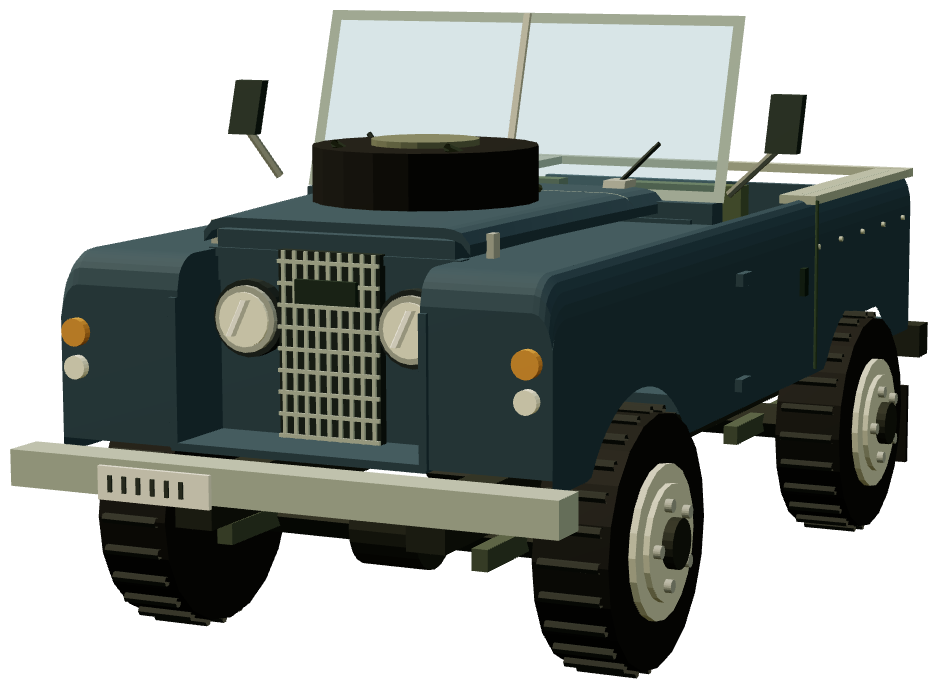
Variants
of this base modelFactory colours
pick one to repaint the rendersCodes on hover. Hex values are representative approximations of period paint unless a source states a measured value.
History
The Land Rover Series II was announced in April 1958, ten years after the original Land Rover's debut at the April 1948 Amsterdam Motor Show, and the Rover Company timed the launch as a tenth-anniversary renewal of its all-conquering utility 4x4. It replaced the Series I, whose production overlapped briefly, and carried over the same two wheelbase lengths - 88 inches for the short model and 109 inches for the long one - both of which ran until the Series IIA succeeded them in late 1961.
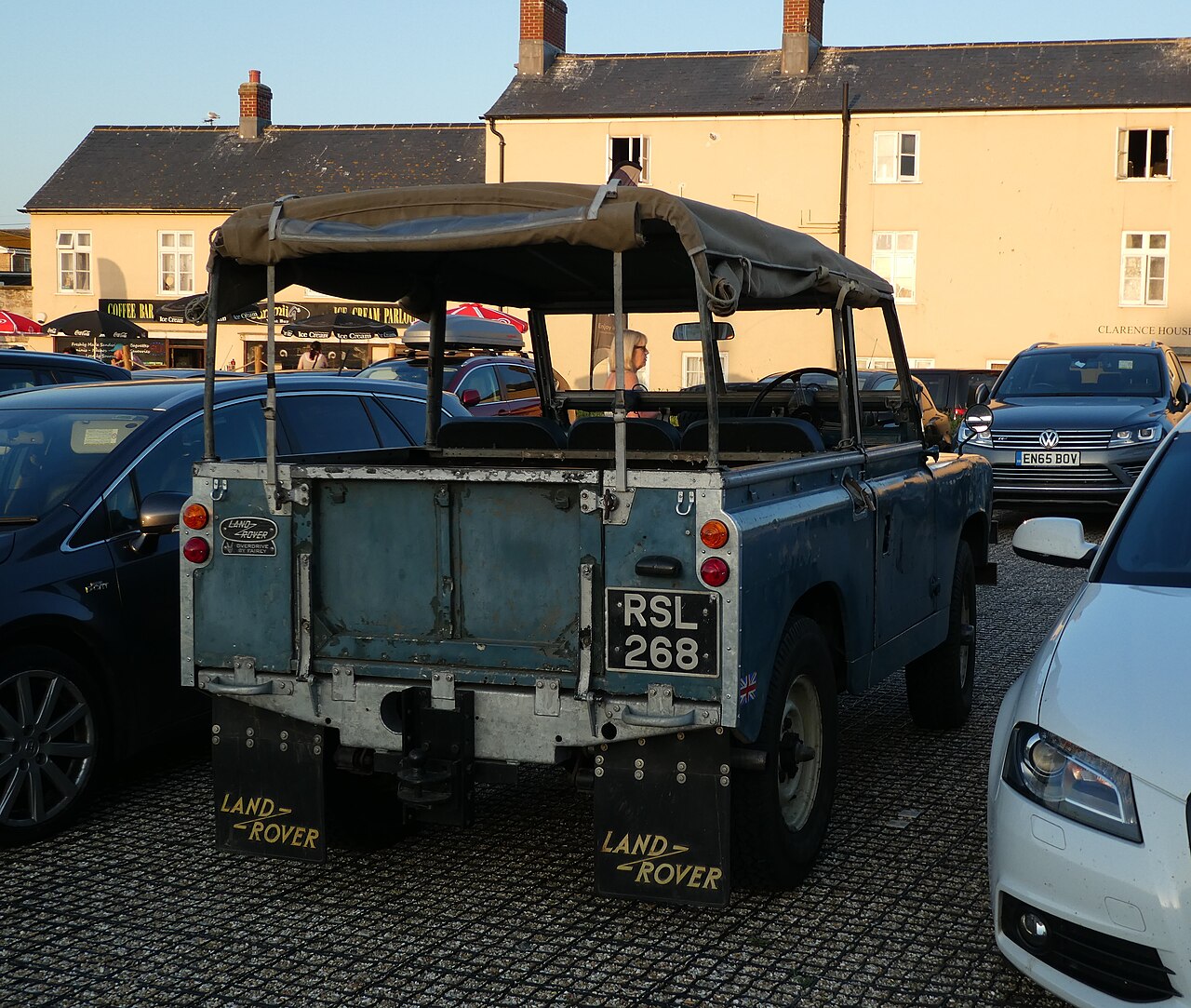
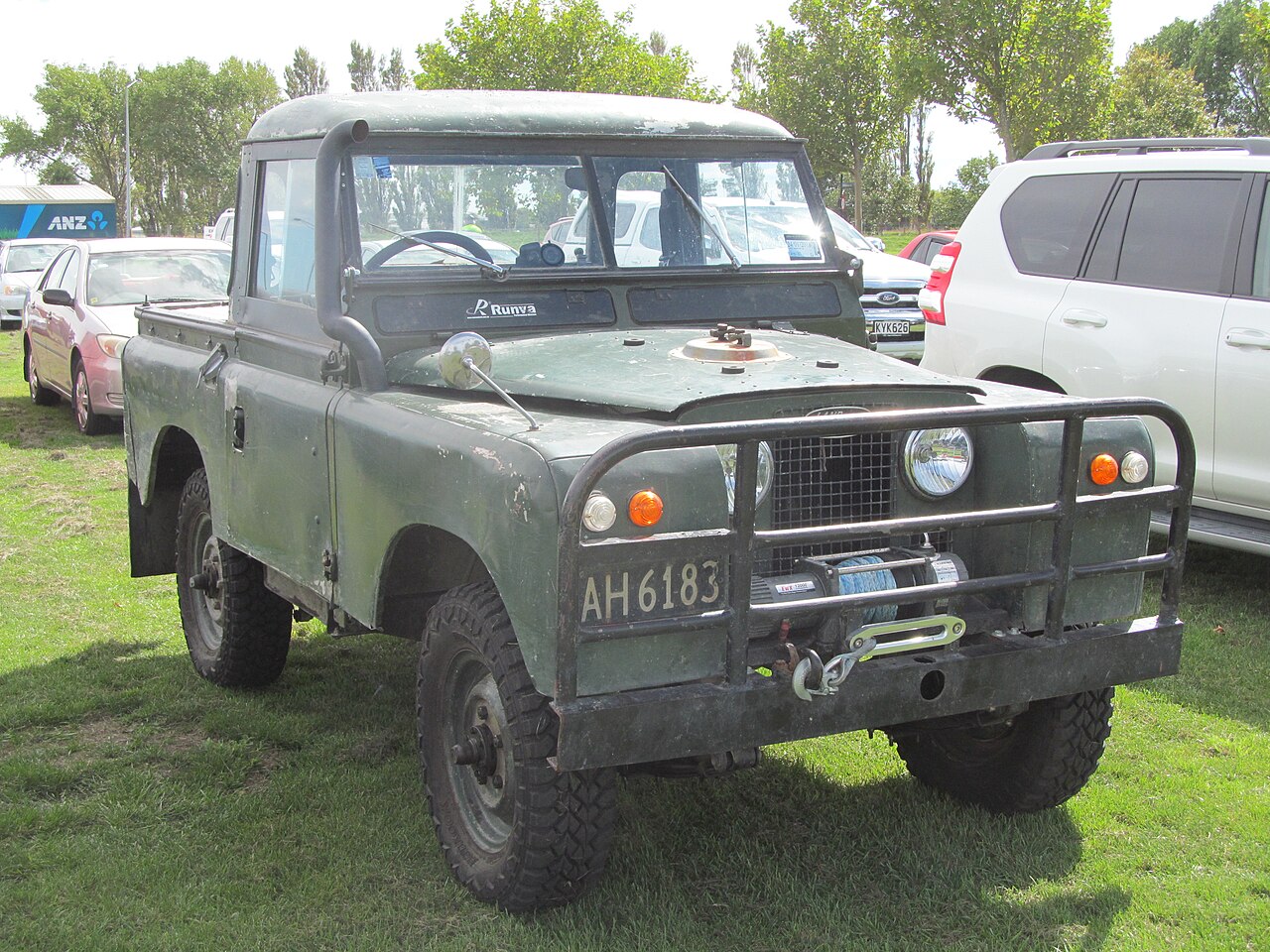
The Series II was the first Land Rover to pass through Rover's styling department. David Bache, who had joined Rover in 1954 as the company's first stylist, gave the vehicle its curved 'barrel side' waistline: the body sat five inches wider than before to cover the widened axle tracks, and the barrelled 'hip' hid the extra width while softening the Series I's slab-sided utilitarian look. Bache also redesigned the truck cab, introducing the curved side windows and rounded roof that, like the barrel sides themselves, remained on Solihull's utility Land Rovers all the way to the final Defender of 2016.
Mechanically the headline change was the new 2.25-litre overhead-valve petrol engine of around 72 bhp, the unit that went on to power Series Land Rovers into the 1980s and earned a worldwide reputation for longevity. Stocks of the old engine were used up first: the first 1,500 or so 88-inch Series IIs retained the 52 bhp 2.0-litre petrol engine from the Series I, while the 51 bhp 2.0-litre diesel introduced in 1957 continued as the diesel option throughout Series II production. The 109-inch model offered the 2.25 petrol and the 2.0 diesel from the start.
Both wheelbases were sold in the full spread of utility bodies - canvas-tilt soft top, hard top, and truck-cab pickup - plus station wagons: a seven-seater on the 88-inch chassis and, from 1958, a new twelve-seat wagon on the 109, its high seat count qualifying it as a bus for British tax purposes. Roughly 110,000 Series IIs of all types were built before the Series IIA took over in September 1961, though its short production life makes the Series II proper the rarer of the two today.
The Series IIA (1961-1971) brought the 2.25-litre diesel and a decade of detail changes while looking almost identical; this registry treats IIA-based vehicles as a separate model line, so the Series II records here cover only the 1958-1961 'Series II proper'.
Imagery
_(51334339106).jpg)
.jpg)
Registry record
- Manufacturer
- Rover Company
- Manufactured
- April 1958 - September 1961
- Engine type
- 2.25 L petrol inline-four (first ~1,500 retained the Series I 2.0 L petrol); 2.0 L diesel inline-four optional
- Production run
- ~110,000 Series II of all types, 88" and 109" combined (no per-wheelbase split published)
- Country of origin
- United Kingdom
- Status
- out of production
Catalogue data
- Record kind
- Base model
- Model line
- Series II
- Family
- Land Rover Series
- Series
- 2
- Wheels
- 4
- Nominal wheelbase
- 88″
- Body style
- No roof
- Variants
- 7
Base catalogue fields are exported from the Difflocked game. In-game physics values are arcade tuning, not certified historical measurements, and are deliberately not shown as specifications here.
Sources & citations
Researched sources
- Land Rover series (Series II: 1958-1961, David Bache, barrel sides, engine availability by wheelbase) ↗ — Wikipedia (accessed 2026-09-09)
- Land Rover engines (2.25 L petrol from 1958; 2.0 L diesel 1957-1962, Series I and II) ↗ — Wikipedia (accessed 2026-09-09)
- Series II & IIA - Land Rover Heritage Collection (April 1948 tenth anniversary; barrelled 'hip' covering widened running gear) ↗ — Land Rover Heritage Collection (accessed 2026-09-09)
- For Sale: Daniel Craig's 67-Year-Old Land Rover Series II (~110,000 built; Series IIA took over September 1961; Bache barrel side) ↗ — Silodrome (accessed 2026-09-09)
- Land Rover Series IIA and II History (Rover Car Company; body styles; 1961 IIA succession) ↗ — Caerbont Automotive Instruments (Smiths Instruments) (accessed 2026-09-09)
- Series Land Rover paint schemes (1958-1961 colour offerings and year ranges) ↗ — expeditionlandrover.info (TeriAnn Wakeman) (accessed 2026-09-09)
Development reference notes
Series I front body review — series1-bronze and Series I configurations · HERITAGE-FLEET-REFERENCES.md
User photographs `s1.jpeg`, `imagesj.jpeg`, `25109914-1-55.jpg` and `s1_.jpeg` show the early Series I front: a narrow central wire-mesh radiator grille with inboard headlamps, broad flat-sided wings rolling over a long front radius, one small white sidelight per wing, and a bonnet tapering forward with rounded long side pressings. The shared Series I builder uses these proportions for both wheelbases. This is a visual reference interpretation, not a measured CAD scan.
Series III front review — standard Series III configurations · HERITAGE-FLEET-REFERENCES.md
User references `hfhimages.jpeg`, `imagesl.jpeg`, and `IMG_1992-jpg.webp` show the tall tapered central plastic grille with shorter side vents, recessed radiator panel, broad wings with rounded leading edges, inboard wing headlamps and white sidelights above amber indicators. The standard Series III bonnet narrows toward the grille. Stage 1 V8 and Santana retain their distinct flush-front grilles. Meteor Works uses a **Series III front**, not the Series IIA front of the army and RAF Marshall ambulances. Its internal `marshal-series3` shell shares the Marshall coachwork but inherits Series III wings, bonnet, grille, headlamps and outer lamps. Meteor adds only its weathered livery, guard and emergency equipment around that standard front, avoiding duplicated headlamp pods. ### Coachwork front-panel corrections - Dobbo and the Marshall family (including Meteor Works and RAF rescue) retain clipped curved side skins through the front wings and doors at their custom body joins. - Queen Elizabeth II’s Series IIA station wagon uses the Series III-style wing-mounted headlights, bonnet and broad black grille shown in the supplied reference. No numberplate is modelled. Reference: `/Users/jo
Registry record updated 2026-09-09T05:38:54.493Z · status: researched