Series III 109″
The long-wheelbase Land Rover Series III carried the 109-inch leaf-sprung chassis from September 1971 until 1985, offered as pickup, hardtop, High Capacity Pick Up and twelve-seat station wagon with four- and six-cylinder engines. It was superseded by the coil-sprung One Ten from March 1983, though production ran on into 1985 for remaining orders.
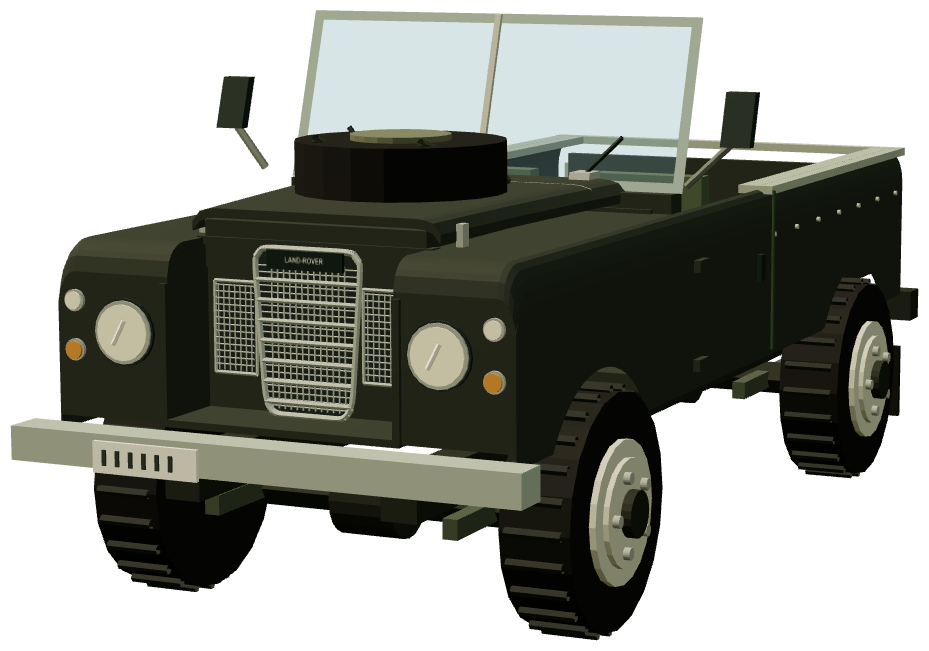
Variants
of this base modelFactory colours
pick one to repaint the rendersCodes on hover. Hex values are representative approximations of period paint unless a source states a measured value.
History
The Series III was launched in September 1971 as the successor to the Series IIA, in 88-inch and 109-inch wheelbases. By then the maker was no longer an independent company: the Rover Company had been subsumed into the Leyland Motor Corporation in 1967, months before Leyland's 1968 merger created British Leyland, and from 1978 the 4x4 business was hived off as the standalone subsidiary Land Rover Limited. Mechanically the Series III was a careful evolution of the IIA — the same leaf-sprung chassis and body panels — but it standardised the all-synchromesh four-speed gearbox introduced on the last Series IIAs, replaced the traditional metal radiator grille with a one-piece moulded ABS plastic item, and fitted a new black plastic dashboard that moved the instruments from the centre of the bulkhead to directly in front of the driver.
Engines carried over from the IIA: the 2.25-litre petrol four (around 73 bhp) and 2.25-litre diesel (around 62 bhp), with the 2.6-litre inline-six petrol available in long-wheelbase 109 models. The six was the first to go, lasting until mid-1980 when the V8-engined Stage 1 took its role at the top of the range; in the same year the 2.25-litre fours were re-engineered with five main bearings in place of the original three, strengthening the bottom end for the remainder of Series and early Defender production.
The Series III became the most numerous of all the Series Land Rovers, with roughly 440,000 built between 1971 and 1985, and it passed a symbolic milestone along the way: the millionth Land Rover rolled off the Solihull line in 1976. In April 1982 the County station wagons arrived on both wheelbases, with cloth seats, tinted glass, soundproofing and side decals — the first serious nod to private buyers, and the start of a nameplate that survived deep into the Defender era. The High Capacity Pick Up on the 109 chassis, offering about 25 per cent more load bed than the standard pickup, appeared the same year.
The Series III was also built and adapted far beyond Solihull. Metalúrgica de Santa Ana of Linares, Spain — later Land Rover Santana — had assembled Land Rovers under licence since 1958 and developed its own increasingly distinct Series-based models, including six-cylinder diesels, before ending its agreement with Land Rover in 1983; the registry carries the Santana 6cyl Diesel separately. Likewise the V8-powered 'Stage 1', built from 1979 to 1985 on the 109 chassis using Range Rover driveline components, is catalogued as its own base model.
The end came in stages. The coil-sprung One Ten replaced the 109 from March 1983, and the Ninety followed in June 1984 to replace the 88; Series III production nevertheless continued into 1985 to satisfy remaining fleet and overseas orders before the leaf-sprung line finally closed.
Imagery
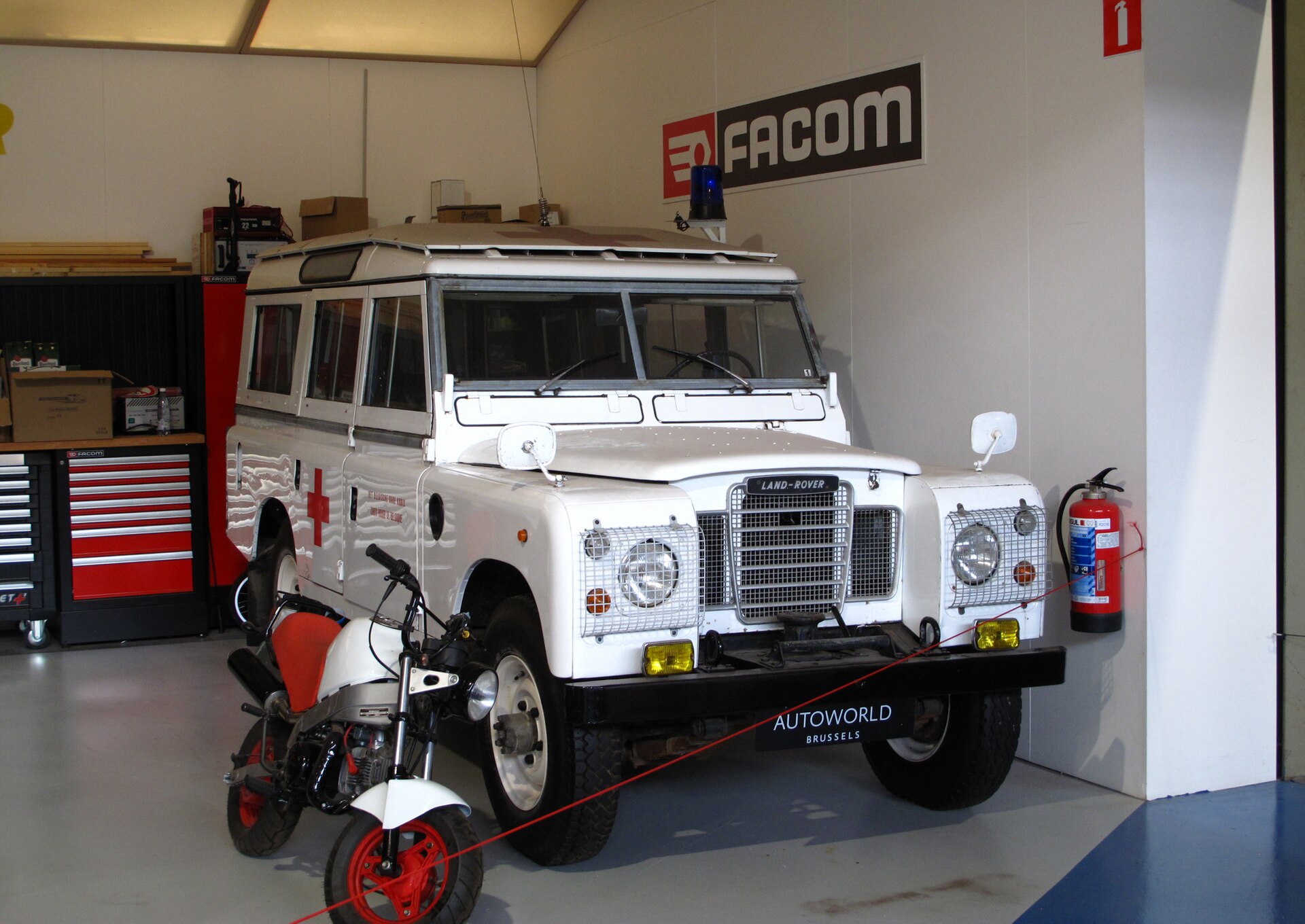
.jpg)
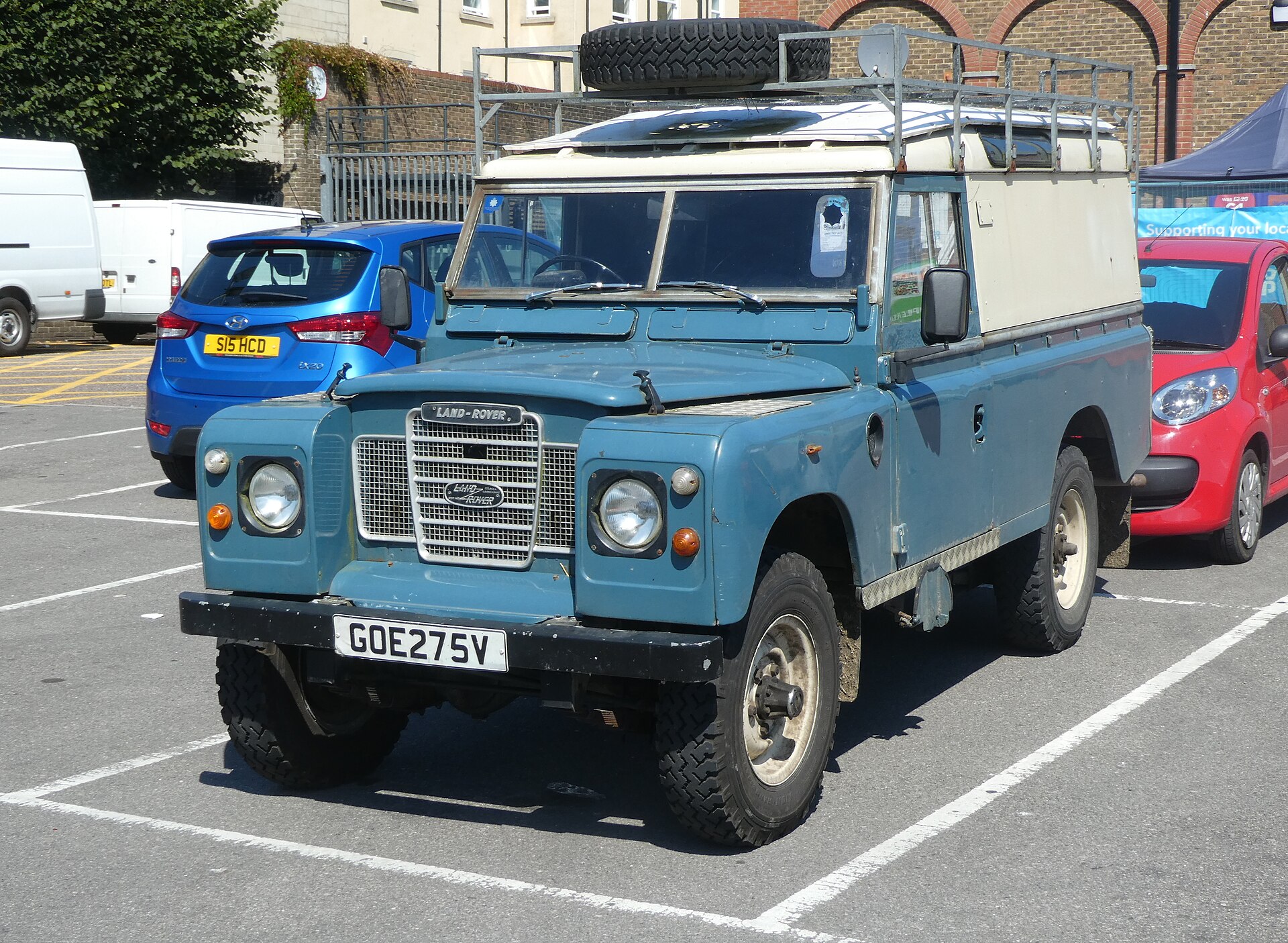
_(50199259846).jpg)
Registry record
- Manufacturer
- Land Rover (Rover Company; British Leyland from 1968, Land Rover Ltd from 1978)
- Manufactured
- 1971–1985 (superseded by the One Ten from March 1983)
- Engine type
- 2.25 L petrol or diesel inline-four (five-bearing from 1980); 2.6 L petrol inline-six to mid-1980
- Production run
- ~440,000 Series III of all types; per-wheelbase split not published
- Country of origin
- United Kingdom
- Status
- out of production
Catalogue data
- Record kind
- Base model
- Model line
- Series III
- Family
- Land Rover Series
- Series
- 3
- Wheels
- 4
- Nominal wheelbase
- 109″
- Body style
- No roof
- Variants
- 7
Base catalogue fields are exported from the Difflocked game. In-game physics values are arcade tuning, not certified historical measurements, and are deliberately not shown as specifications here.
Sources & citations
Researched sources
- Land Rover series (Series III: 440,000 built 1971–1985; engines; millionth Land Rover 1976; County 1982; Santana licence) ↗ — Wikipedia (accessed 2026-09-09)
- Land Rover Defender (One Ten launched 1983, Ninety followed 1984) ↗ — Wikipedia (accessed 2026-09-09)
- Series 3 Land Rover Guide (109 introduced 1971, produced until 1985; One Ten from March 1983; 2.6 six to mid-1980; five-bearing 2.25 from 1980; HCPU) ↗ — John Brown 4x4 (accessed 2026-09-09)
- Series Land Rover paint schemes (factory colour ranges for the Series III era) ↗ — expeditionlandrover.info (TeriAnn Wakeman) (accessed 2026-09-09)
- Leyland Land Rover 88″ Wheelbase Series III brochure, April 1978 (body colour: Camino gold) ↗ — Rover P6 Australia (scan) (accessed 2026-09-09)
Development reference notes
Series I front body review — series1-bronze and Series I configurations · HERITAGE-FLEET-REFERENCES.md
User photographs `s1.jpeg`, `imagesj.jpeg`, `25109914-1-55.jpg` and `s1_.jpeg` show the early Series I front: a narrow central wire-mesh radiator grille with inboard headlamps, broad flat-sided wings rolling over a long front radius, one small white sidelight per wing, and a bonnet tapering forward with rounded long side pressings. The shared Series I builder uses these proportions for both wheelbases. This is a visual reference interpretation, not a measured CAD scan.
Series III front review — standard Series III configurations · HERITAGE-FLEET-REFERENCES.md
User references `hfhimages.jpeg`, `imagesl.jpeg`, and `IMG_1992-jpg.webp` show the tall tapered central plastic grille with shorter side vents, recessed radiator panel, broad wings with rounded leading edges, inboard wing headlamps and white sidelights above amber indicators. The standard Series III bonnet narrows toward the grille. Stage 1 V8 and Santana retain their distinct flush-front grilles. Meteor Works uses a **Series III front**, not the Series IIA front of the army and RAF Marshall ambulances. Its internal `marshal-series3` shell shares the Marshall coachwork but inherits Series III wings, bonnet, grille, headlamps and outer lamps. Meteor adds only its weathered livery, guard and emergency equipment around that standard front, avoiding duplicated headlamp pods. ### Coachwork front-panel corrections - Dobbo and the Marshall family (including Meteor Works and RAF rescue) retain clipped curved side skins through the front wings and doors at their custom body joins. - Queen Elizabeth II’s Series IIA station wagon uses the Series III-style wing-mounted headlights, bonnet and broad black grille shown in the supplied reference. No numberplate is modelled. Reference: `/Users/jo
Registry record updated 2026-09-09T05:41:03.029Z · status: researched