Snatch Land Rover
The Snatch Land Rover is a protected patrol vehicle built on the heavy-duty Defender 110 chassis with NP Aerospace's CAV 100 composite armour, introduced in 1992 for Northern Ireland and later deployed — controversially — to Iraq and Afghanistan.
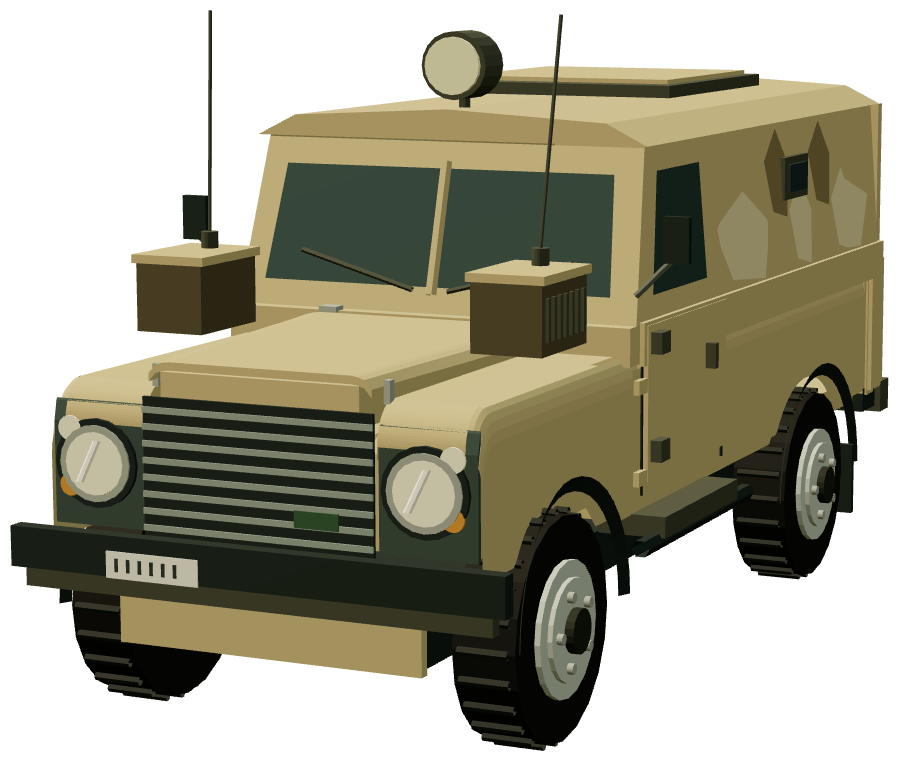
Factory colours
- NATO Green (IRR)
- Light Stone
Codes on hover. Hex values are representative approximations of period paint unless a source states a measured value.
History
The Snatch was developed for public-order and patrol work in Northern Ireland, taking its name from the 'snatch squads' used to arrest riot ringleaders. It pairs the Land Rover Heavy Duty chassis — a militarised version of the Defender 110 — with a CAMAC CAV 100 composite armoured body manufactured by NP Aerospace of Coventry, developed with assistance from Ricardo. The glass-reinforced composite shell protects against small-arms fire and fragmentation while keeping weight around 4,050 kg. First introduced in 1992, roughly 991 were built across six variants at a reported unit cost of about £50,000 plus armour. The original Snatch-1 used the 3.5-litre Rover V8 petrol engine; later builds and rebuilds moved to the 300Tdi diesel. Variants included the Snatch-1.5 (278 'desertised' vehicles), the left-hand-drive 12-volt Snatch-2, the 24-volt Snatch-2A 'global' and Snatch-2B Northern Ireland versions, and finally the Snatch Vixen with an uprated chassis and drivetrain giving greater payload headroom.
After a decade of Northern Ireland service the Snatch was sent to Iraq from 2003, and later Afghanistan, largely because it was available and offered a low-profile alternative to tracked armour. There its limits became a national controversy: designed against Northern Ireland's threats, it offered little protection from roadside bombs and mines, and by the late 2000s around 37 UK service personnel had died in Snatch Land Rovers since 2003. Soldiers dubbed it the 'mobile coffin', bereaved families campaigned and in 2009 sued the Ministry of Defence, and the vehicle became shorthand in British public debate for procurement failure and under-equipment. The MoD's position was that commanders needed a spectrum of vehicles, but successive coroners' inquests criticised its use in high-threat areas.
Better-protected vehicles — Mastiff, Ridgback, and from 2010 the Ocelot/Foxhound light protected patrol vehicle announced by Gordon Brown as the Snatch's replacement — progressively displaced it from front-line patrol roles, though Snatches lingered in lower-threat duties. A Snatch is displayed at the Imperial War Museum in London as an artefact of the Iraq and Afghanistan campaigns.
Imagery
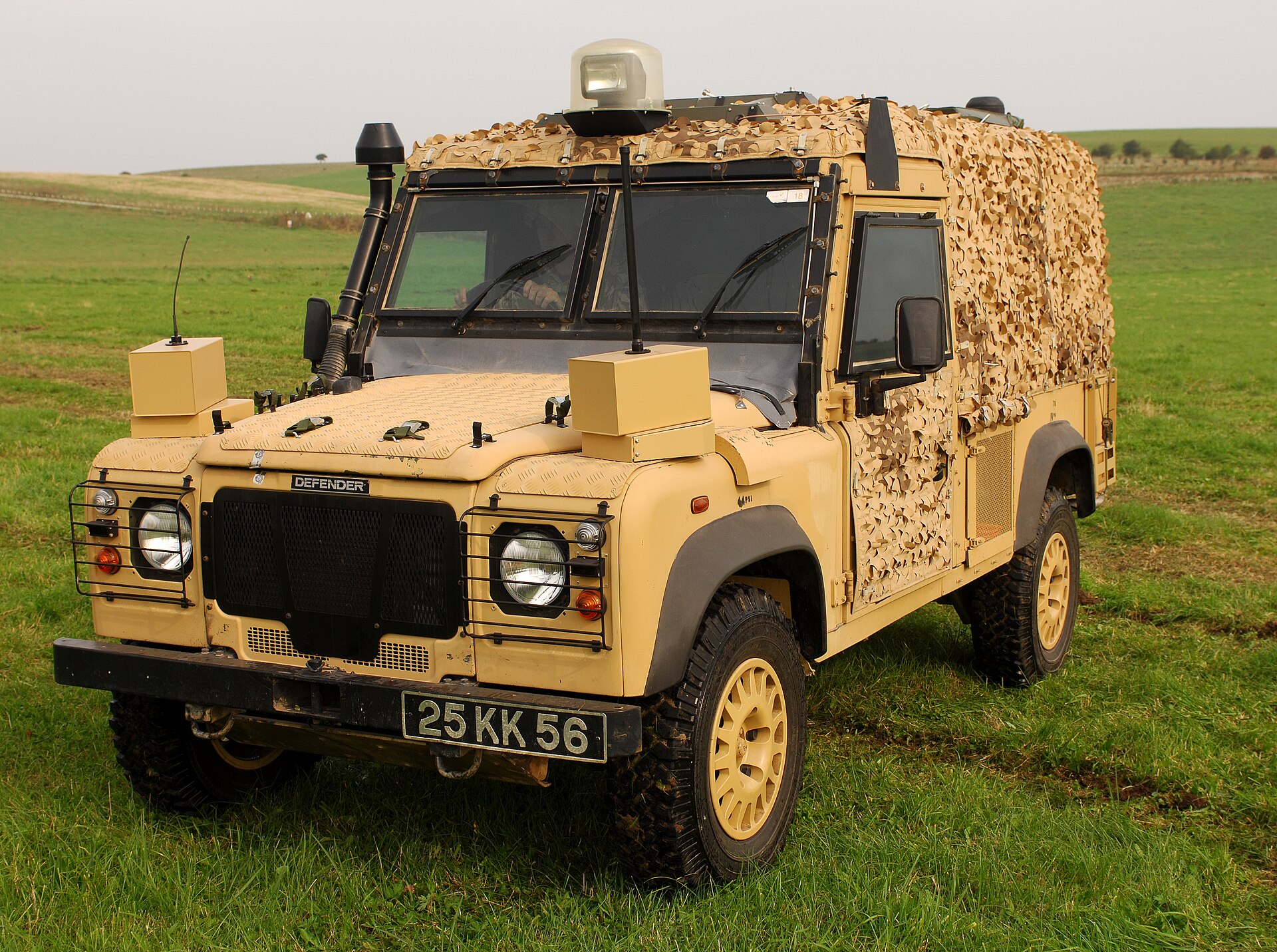

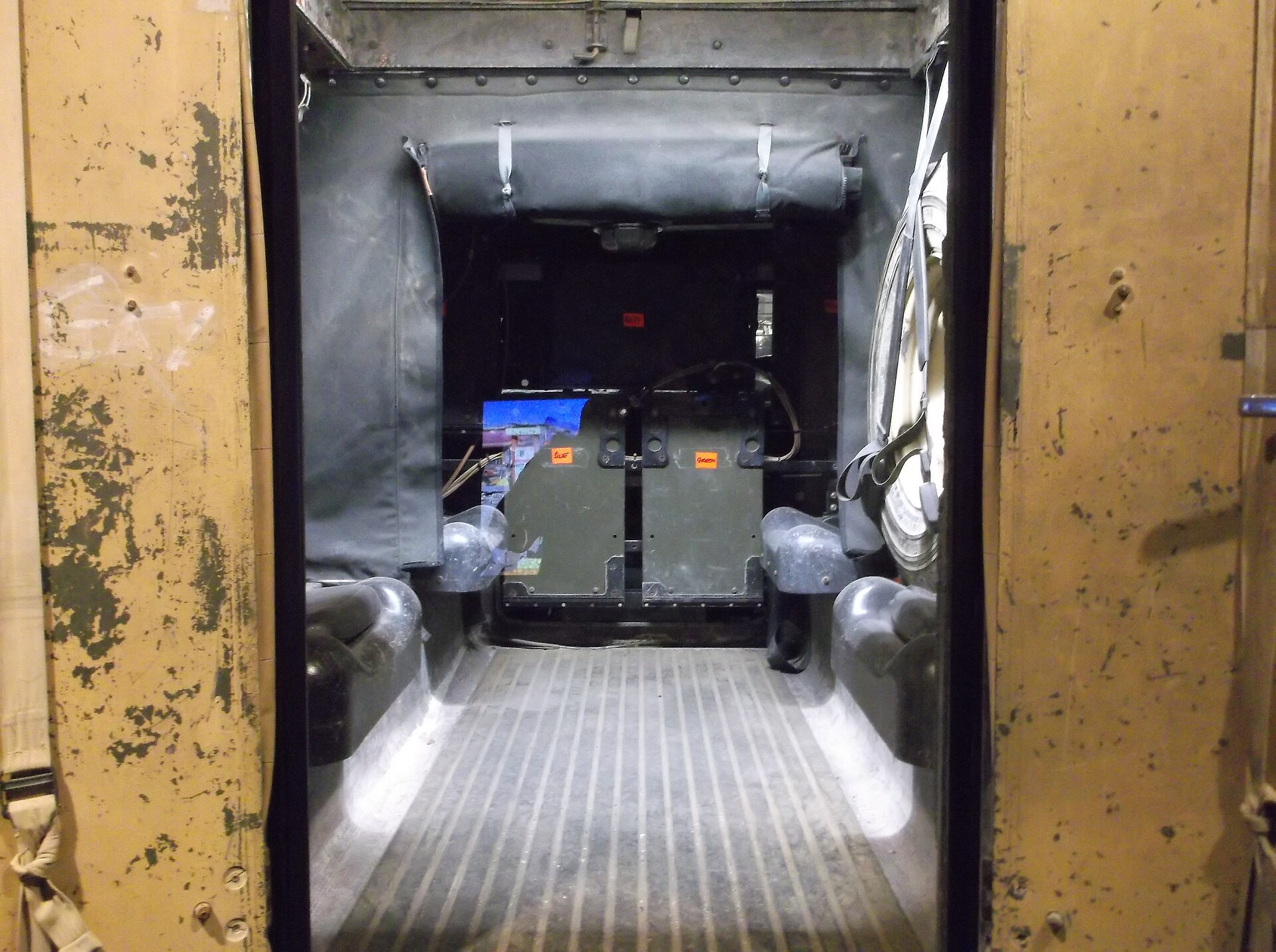
.JPG)
Registry record
- Manufacturer
- Land Rover (base vehicle)
- Manufactured
- introduced 1992; Snatch Vixen upgrades from 2008
- Modifier / coachbuilder
- NP Aerospace (CAV 100 composite armoured body)
- Engine type
- 3.5 L Rover V8 petrol (Snatch-1); 2.5 L 300Tdi diesel (later variants)
- Production run
- ~991 vehicles across six variants
- Country of origin
- United Kingdom
- Status
- withdrawn from front-line service; replaced by the Foxhound (Ocelot) from 2010
Catalogue data
- Record kind
- Named model
- Model line
- Defender
- Wheels
- 4
Base catalogue fields are exported from the Difflocked game. In-game physics values are arcade tuning, not certified historical measurements, and are deliberately not shown as specifications here.
Sources & citations
Researched sources
- Snatch Land Rover (CAV 100 by NP Aerospace on Heavy Duty 110 chassis; 1992; ~991 built; variants; ~37 deaths since 2003; Ocelot replacement announced 2010) ↗ — Wikipedia (accessed 2026-09-09)
- Land Rover Snatch-Vixen vehicle 01 (UOR Equipment Demonstration, Salisbury, September 2008) ↗ — UK MOD Defence Images via Wikimedia Commons (accessed 2026-09-09)
- Snatch Land Rover, Imperial War Museum (museum display of the type used in Northern Ireland and refitted for Iraq) ↗ — Wikimedia Commons (accessed 2026-09-09)
Drive it
This vehicle is playable in the Difflocked racing game.
RACE THE SNATCH LAND ROVER ↗Registry record updated 2026-09-09T10:03:26.325Z · status: researched