TACR1
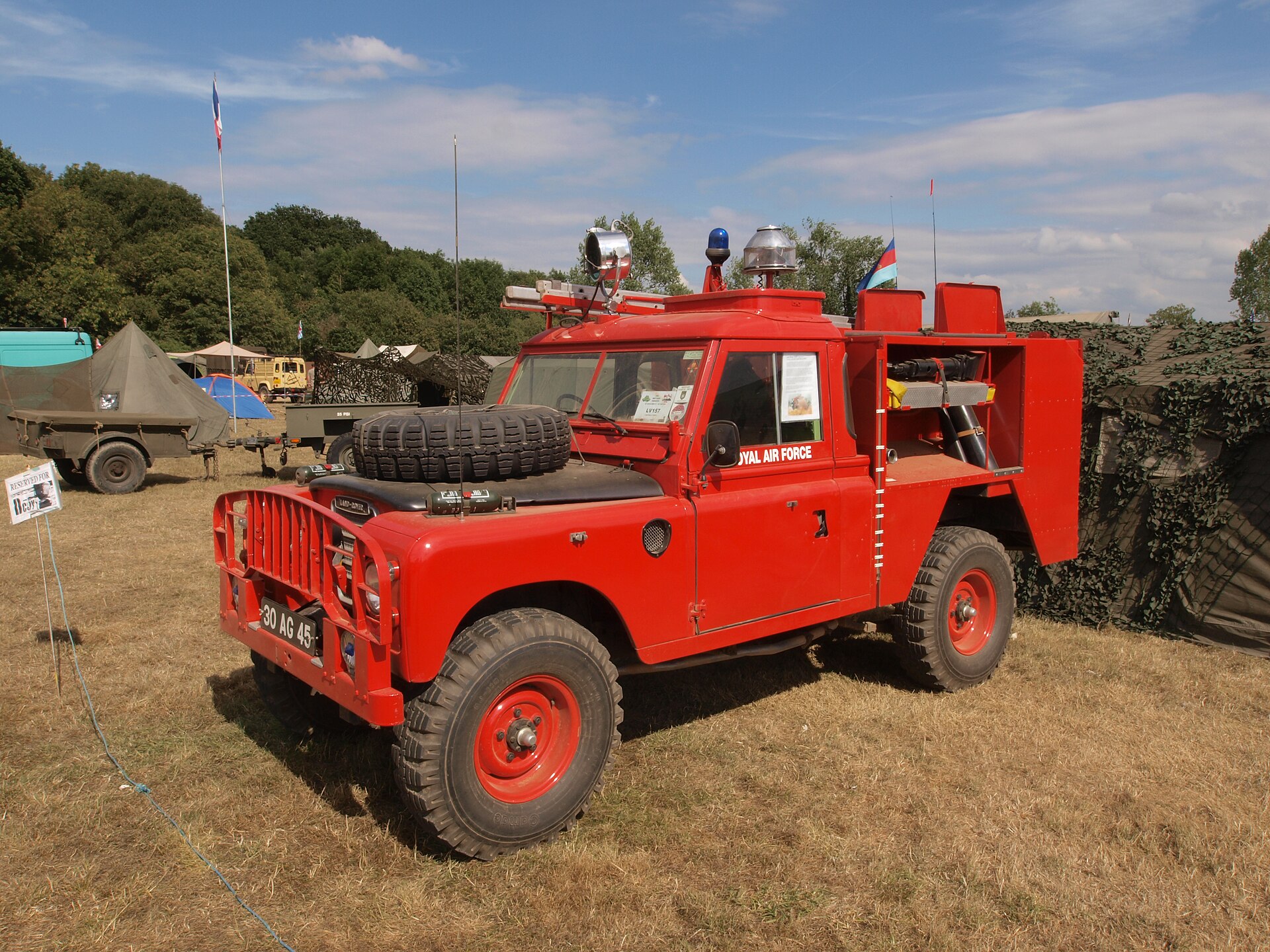
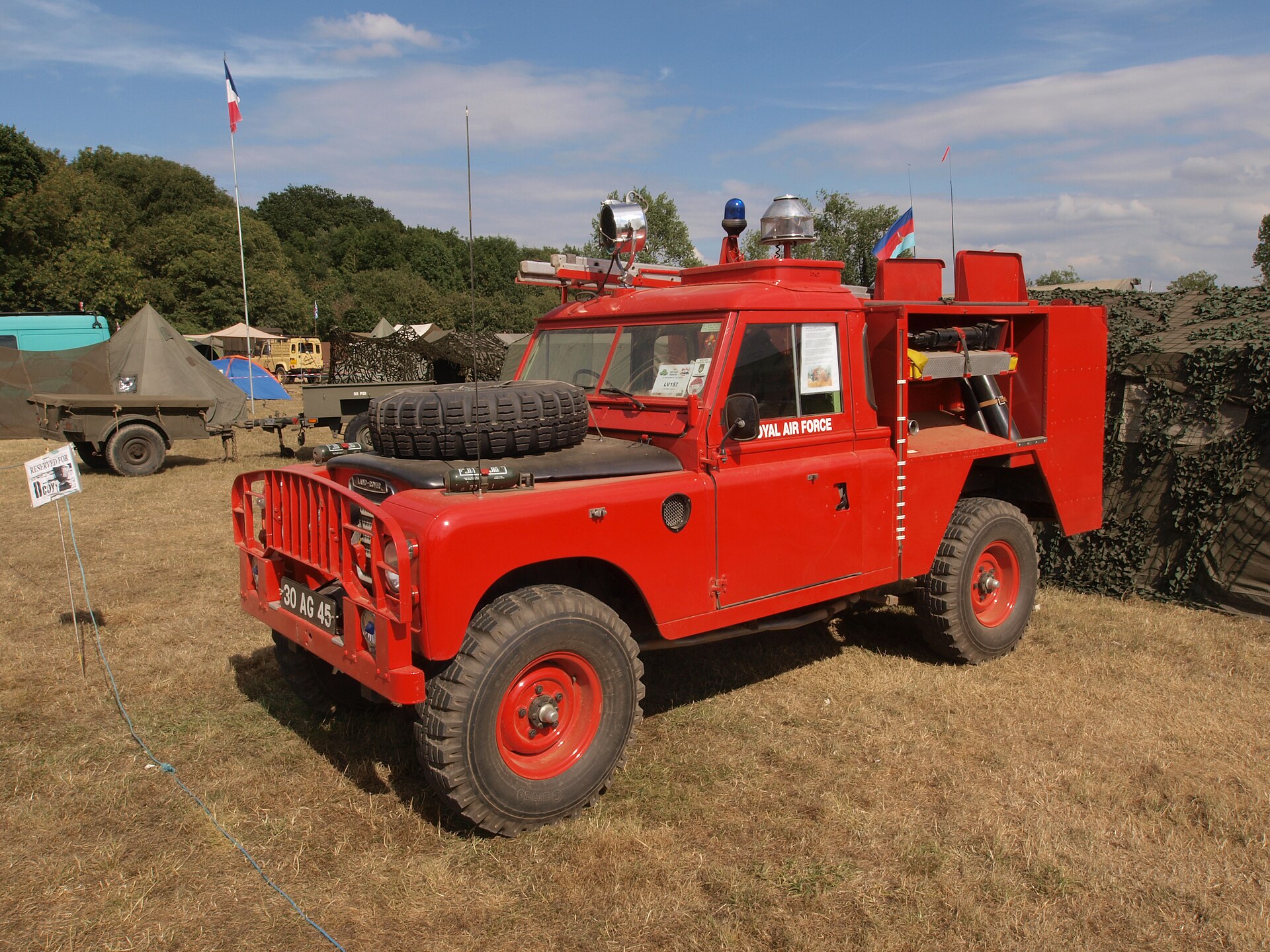
Rapid-intervention airfield crash rescue truck of the RAF and Royal Navy, built by HCB-Angus on uprated 1-Ton-specification Land Rover 109 chassis to reach a crashed aircraft and begin rescue work ahead of the major foam tenders.
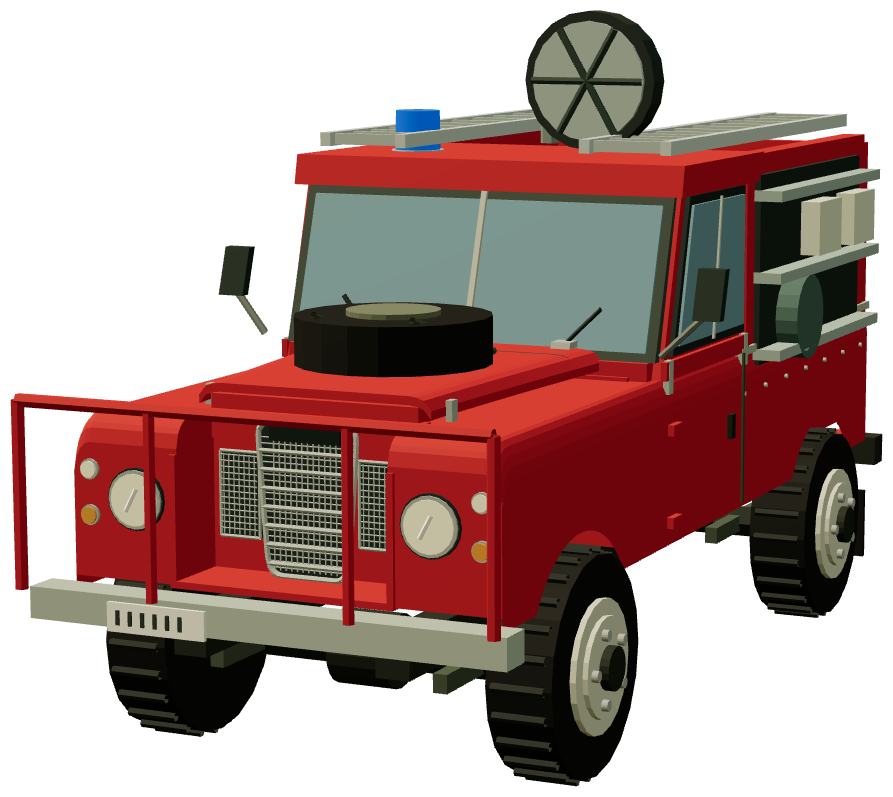
Factory colours
- Fire Engine Red
Codes on hover. Hex values are representative approximations of period paint unless a source states a measured value.
History
TACR1 - Truck, Airfield Crash Rescue, Mark 1 - was the third generation of Land Rover-based crash rescue trucks in RAF service, entering service in 1972 to supersede the earlier ACRT dry-powder and TACT foam trucks. Its job was to be first on scene: a three-man crew raced ahead of the heavy foam tenders to begin rescuing aircrew from a crashed aircraft, and between incidents the trucks escorted taxiing aircraft. The substantial front brush guard was fitted so a responding TACR1 could crash straight through airfield emergency gates without stopping.
The conversions were built by fire-appliance coachbuilder HCB-Angus of Southampton on uprated 109-inch chassis: an initial batch of 22 Series IIA vehicles on the heavy-duty 231-prefix chassis sequence with ENV axles, delivered in Mist White undercoat to the RAF at Aston Down in 1970-71, followed by Series III batches on 911-prefix chassis. Although Land Rover catalogued these as 3/4-ton vehicles, the makers' and military specification plates identify the TACR1 as a 1-ton truck. All used the 2.25-litre petrol engine. The truck carried pre-mixed AFFF (aqueous film-forming foam), an EPCO hydraulic rescue kit and a pneumatic 'ripper gun'; with only a standard cab, the third crew member sat in an exposed rear position connected to the cab by a voice tube.
TACR1s served with the RAF Fire and Rescue Service and the Royal Navy's airfields from the early 1970s until the early 1990s, including detached Harrier-site operations, and the first example delivered (28 AG 00) covered some 230 incidents in 58 days during the 1977 national firemen's strike. Around 89 were built and few survive; the Range Rover-based TACR2 began replacing them from 1977.
Imagery
_owned_by_Paul_Hazell_pic1.JPG)
_owned_by_Paul_Hazell_pic2.JPG)
Registry record
- Manufacturer
- Land Rover (British Leyland)
- Manufactured
- Built from 1970-71 (Series IIA batch) into the mid-1970s; in service 1972 to the early 1990s
- Modifier / coachbuilder
- HCB-Angus (Southampton)
- Engine type
- 2.25 L petrol inline-four
- Production run
- ~89 vehicles
- Country of origin
- United Kingdom
- Status
- retired; a handful preserved
Catalogue data
- Record kind
- Named model
- Model line
- Series III
- Wheels
- 4
Base catalogue fields are exported from the Difflocked game. In-game physics values are arcade tuning, not certified historical measurements, and are deliberately not shown as specifications here.
Sources & citations
Researched sources
- 28 AG 00 RAF Fire and Rescue Service TACR1 (service history, AFFF, EPCO kit, ripper gun, 1977 firemen's strike) ↗ — UK Emergency Vehicles (accessed 2026-09-10)
- Land Rover TACR1 1 Ton Fire Truck For Sale (HCB-Angus body on uprated Series II/III chassis; 89 built; RAF service to early 1990s) ↗ — Landybitz (accessed 2026-09-10)
- Other Vehicles - 1-Ton 109" Land-Rovers 1968-77 (TACR1 chassis batches, ENV axles, Mist White delivery, 1-ton plating) ↗ — onetonlandrovers.co.uk (accessed 2026-09-10)
- 71RN52 Land Rover HCB TACR1 Royal Navy (Royal Navy operation, HCB-Angus build) ↗ — Fire Engine Photos (accessed 2026-09-10)
Drive it
This vehicle is playable in the Difflocked racing game.
RACE THE TACR1 ↗Registry record updated 2026-09-09T15:08:10.994Z · status: researched