Tickford Station Wagon
The first Land Rover Station Wagon: a seven-seat, aluminium-panelled, wood-framed estate body built by coachbuilder Tickford of Newport Pagnell on the 80-inch Series I chassis from 1948 to 1951. Taxed as a private car, it proved too expensive for the home market and only ~650 were built, of which ~20 are thought to survive.
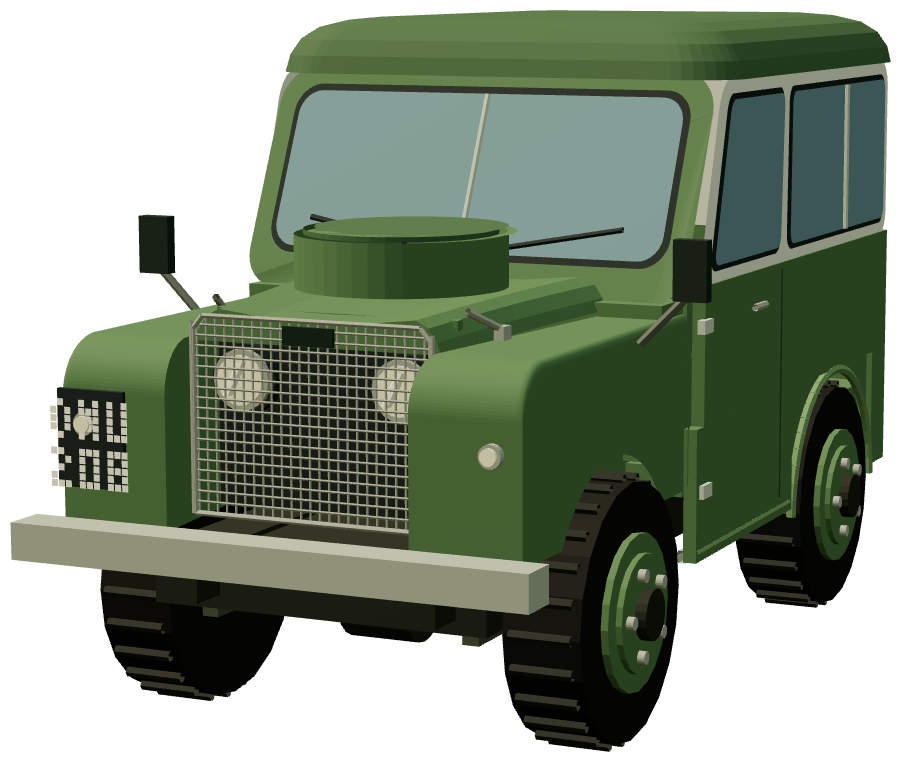
Factory colours
- Pastel Green
- Bronze Green
Codes on hover. Hex values are representative approximations of period paint unless a source states a measured value.
History
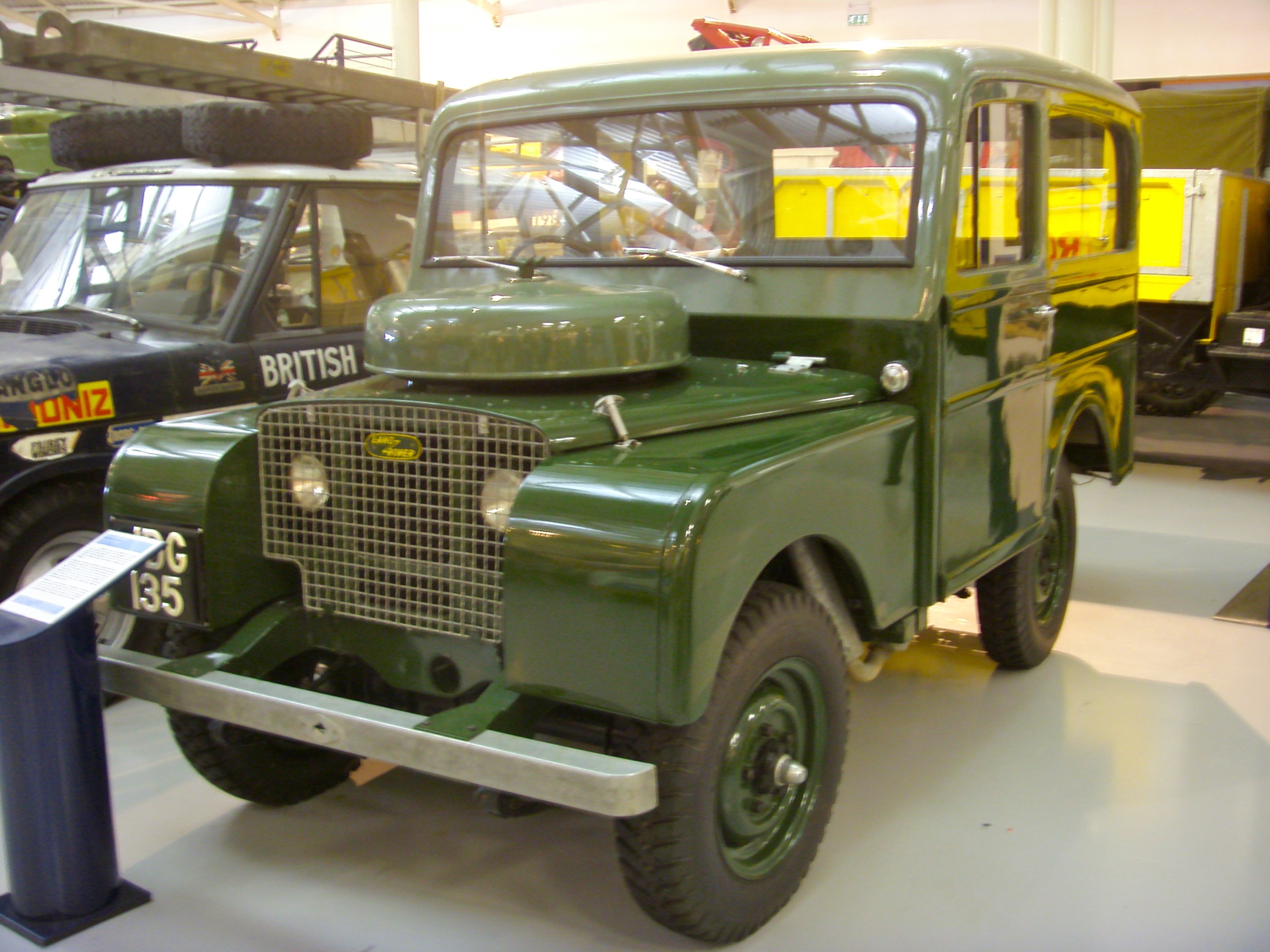
Rover launched the Land Rover in 1948 as a tax-exempt agricultural workhorse, and almost immediately offered a second, more civilised body option: the Station Wagon. The body was not built at Solihull but by Tickford Ltd of Newport Pagnell, a coachbuilder better known for its work on Rolls-Royce and Lagonda chassis. Constructed in the traditional coachbuilt manner — aluminium alloy panels over a timber frame — the body was mounted on the standard 80-inch Series I chassis with its 1.6-litre petrol engine, and offered seating for seven, with four removable folding seats in the rear.
Compared with the spartan standard Land Rover the Tickford was well equipped, with leather seats, a heater, a one-piece laminated windscreen, a tin-plate spare wheel cover and interior trim. It was, in effect, an early ancestor of the modern SUV, offering estate-car versatility on a four-wheel-drive platform two decades before the Range Rover.
The model was undone by economics. The labour-intensive wooden construction made it expensive to build, and the taxation authorities classified it as a private car, so unlike the commercial-vehicle Land Rover it attracted Purchase Tax. That took the price to £959 in 1949, against about £580 for the tax-exempt standard Series I. Sales at home collapsed as a result: sources put total production at around 641-651 vehicles (contemporary accounts say 'fewer than 700'), of which over 600 went for export — a number of them to aid agencies including UNICEF — and only about 50 were sold in Britain. Production ended in 1951, and Land Rover's next station wagons, from 1954, used in-house all-metal bodies.
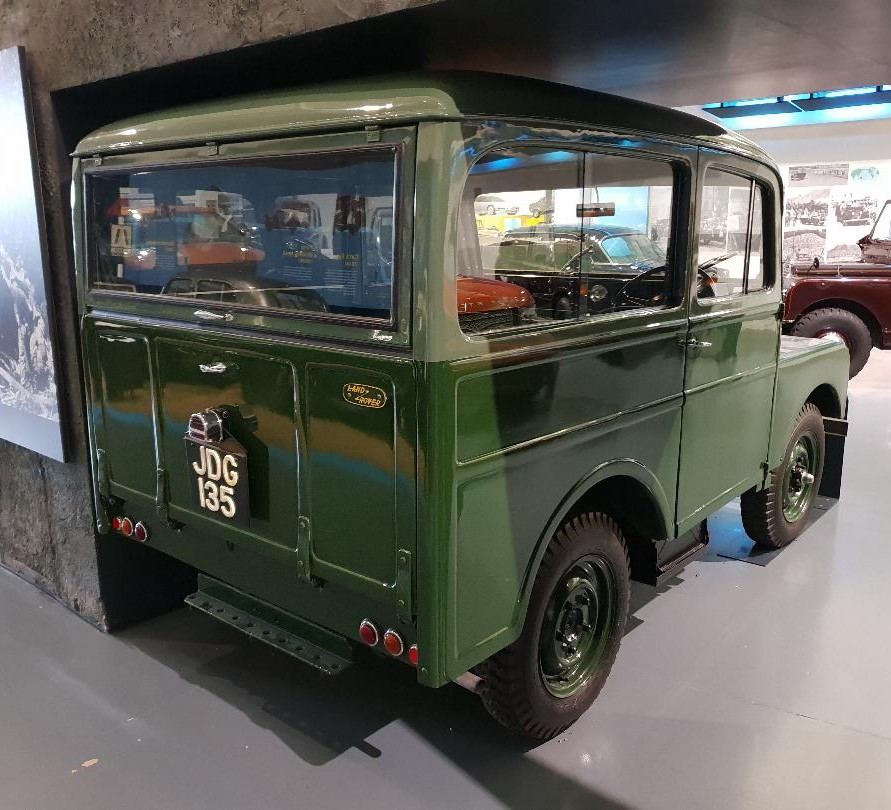
Today the Tickford is one of the rarest and most sought-after early Land Rover variants, with only around 20 examples estimated to survive. A 1949 example built on 31 October 1949, gifted by a private collector in 2005, is displayed at the British Motor Museum at Gaydon, and an unrestored ex-UNICEF 1950 example (HSL 605) has been photographed as part of the Dunsfold Collection in Surrey.
Imagery
.jpg)

Registry record
- Manufacturer
- Rover (Land Rover Series I chassis)
- Manufactured
- 1948–1951
- Modifier / coachbuilder
- Tickford Ltd, Newport Pagnell ↗
- Engine type
- 1.6 L (1,595 cc) petrol inline-four
- Production run
- ~650 built (sources cite 641-700); all but ~50 exported
- Current owner
- British Motor Museum, Gaydon (1949 example) ↗
- Country of origin
- United Kingdom
- Status
- Out of production since 1951; ~20 examples estimated to survive, including museum examples at the British Motor Museum and in the Dunsfold Collection
Catalogue data
- Record kind
- Named model
- Model line
- Series I
- Wheels
- 4
Base catalogue fields are exported from the Difflocked game. In-game physics values are arcade tuning, not certified historical measurements, and are deliberately not shown as specifications here.
Sources & citations
Researched sources
- Land Rover series (Station Wagons section) ↗ — Wikipedia (accessed 2026-09-09)
- Rare 1949 Tickford Land Rover Station Wagon at the British Motor Museum ↗ — Classic Car Valuations (accessed 2026-09-09)
- British Motor Museum: Land Rover Series I 80" Tickford station wagon built 31 October 1949 (Heritage Certificate) ↗ — British Motor Museum (X) (accessed 2026-09-09)
- 1950 Land Rover Series I Station Wagon, Coachwork by Tickford ↗ — Iconic Auctioneers (accessed 2026-09-09)
- 1949 Land Rover Series I 4x4 Station Wagon, chassis L06200143 ↗ — Bonhams (accessed 2026-09-09)
- Land Rover Series I Station Wagon by Tickford ↗ — Brightwells (accessed 2026-09-09)
- Land Rover Series 1 80 inch Tickford Station Wagon, Reg. HSL 605, chassis no. L06200409, part of the Dunsfold Collection ↗ — Alamy (accessed 2026-09-09)
- The Dunsfold Collection ↗ — Dunsfold Collection (accessed 2026-09-09)
- 1949 Land-Rover Series I swb Station Wagon Tickford specifications ↗ — automobile-catalog.com (accessed 2026-09-09)
Drive it
This vehicle is playable in the Difflocked racing game.
RACE THE TICKFORD STATION WAGON ↗Registry record updated 2026-09-09T05:01:02.135Z · status: researched